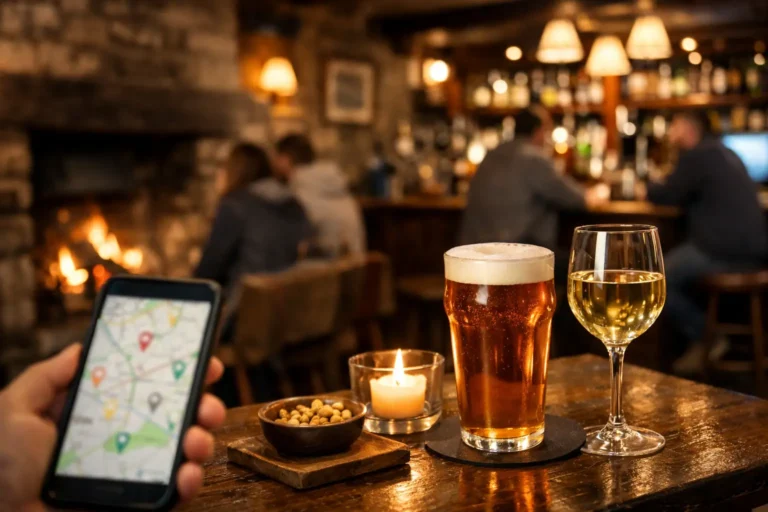

A pub with a 4.8-star rating can still be the wrong place for your Friday night. Perhaps it serves excellent cask ale but stops food early, or has a lovely garden that is less useful in February. So, can you trust pub reviews? Usually, yes – provided you read beyond the number and match the feedback to the sort of pub visit you actually want.
A good pub review is not a universal verdict. It is one person’s account of a particular visit, at a particular time, with their own priorities. The trick is to look for patterns, useful detail and reviews from people whose plans sound like yours.
Can You Trust Pub Reviews at All?
Pub reviews are valuable because they reveal things a venue’s own website often cannot: whether the bar feels welcoming, how busy it gets before a match, whether the beer garden catches the afternoon sun, and if the Sunday roast is worth booking ahead for. A recent review can also flag changes to food, service, opening hours or the beer range.
But no review platform can promise that every opinion will be perfectly fair, current or relevant to you. A one-star complaint may stem from a single difficult evening when the pub was short-staffed. Equally, a glowing five-star comment saying only “Great place!” gives you very little to work with.
The most trustworthy picture comes from several reviews read together. If numerous visitors mention friendly staff, well-kept pints and a relaxed local atmosphere, that is more meaningful than one dramatic comment either way. Look for the recurring details rather than getting caught up in the loudest opinion.
Start With Your Own Pub Priorities
Before reading ratings, decide what would make the visit a success. A historic pub for a quiet midweek pint has different strengths from a city-centre venue for a birthday group. Neither is better by default.
For example, ale drinkers may want recent comments on cask condition, beer turnover and the variety at the pumps. Families might care more about food timings, space, high chairs and whether the garden is practical. If you are planning a pub crawl, reviews that mention location, queues and how easily the pub fits into a walking route are especially useful.
Atmosphere deserves a little thought too. “Lively” can mean a brilliant buzz to one group and too much noise to another. “Traditional” may suggest a snug, proper local with a jukebox and darts, or simply a smaller pub with limited seating. Reviews become far more useful when you translate those descriptions through your own plans.
Read the Detail, Not Just the Star Rating
A star average is a handy starting point, but it cannot explain why people rated a pub as they did. Read a mix of recent positive, middling and critical reviews, particularly those with specific observations.
Useful reviews tend to answer practical questions. Was the food good for the price? Was there a wait at the bar? Did the reviewer visit on a packed Saturday or a quiet Tuesday afternoon? Did staff help find a table, accommodate a dog or explain the beer list? Context makes an opinion easier to judge.
Be cautious with reviews that are very broad or intensely emotional without explaining what happened. That does not mean dismissing a disappointed visitor, but it does mean treating the comment as one account rather than the final word. The same applies to overly glowing reviews that offer no detail at all.
A helpful way to read a score is to ask what sits beneath it. A pub rated four stars may be consistently good, with minor quibbles about a busy bar or limited parking. That can be a safer bet than a venue with a higher score based on a small handful of vague reviews.
Check when the review was written
Pubs change. A new landlord, a refreshed kitchen team, a changed brewery tie or a renovated garden can alter the experience quickly. Older reviews still help you understand a pub’s character, especially at long-standing venues, but recent comments are better for checking today’s food, service and beer offer.
Season matters as well. A review praising a huge beer garden in July says little about a winter visit, while complaints about a crowded indoor bar during Christmas week may not reflect a normal Thursday. Match the timing of the review to the timing of your own visit where possible.
Look for a believable spread of opinions
A healthy set of pub reviews will rarely be entirely perfect. Different visitors notice different things, and even excellent pubs have an occasional off day. A mixture of thoughtful four- and five-star reviews, plus the odd measured criticism, can feel more credible than a wall of identical praise.
Pay attention to how a pub responds to feedback where replies are visible. A calm, constructive response to a concern suggests that the team takes guests seriously. It is not a guarantee of a perfect visit, but it is a useful sign of how the pub approaches hospitality.
Spot the Signals That Matter for UK Pubs
For a proper British pub outing, the details often matter more than polished photographs. A reviewer who says the landlord knows the regulars, the fire was on, the bitter was in good nick, or the garden had plenty of sheltered tables gives you a clearer sense of the place.
When comparing pubs, look for feedback on the things that can genuinely shape the day:
- Beer and other drinks: cask condition, local breweries, sensible choice, decent non-alcoholic options and whether staff know what is on.
- Food: portion size, menu range, dietary needs, booking advice and whether the kitchen hours suit your plans.
- Atmosphere: quiet corners, music volume, sport on screens, dog-friendly areas and whether it works for a date, family meal or group catch-up.
- Practicalities: accessibility, toilets, nearby transport, outdoor seating, payment options and how busy the pub gets at key times.
None of these points needs to be perfect. A tiny listed pub may have no room for prams, while a popular sports pub may be noisy during a big fixture. What matters is knowing that before you set off, rather than expecting every pub to suit every occasion.
Community Reviews and Editorial Recommendations
Community feedback and editorial pub recommendations do different jobs, and the best pub discovery uses both. Community reviews offer a broad range of recent experiences from people who have actually visited. They are excellent for checking the everyday realities of a venue.
Editorial recommendations add focus. A pub specialist can compare venues on the same street, explain why one is better for cask ale and another for a long lunch, or point out hidden gems that might not yet have hundreds of ratings. A good guide should be clear about what a pub does well, who it suits and any limitations worth knowing.
This is particularly handy when you are exploring somewhere unfamiliar. Search results can be dominated by large chains or generic listings, even when a better independent local is two streets away. A pub-focused guide gives more weight to character, beer, history and the experience of spending time there.
Make Reviews Work Harder for Your Plans
Rather than searching for one flawless pub, build a short list of two or three places that suit the occasion. Check recent reviews, opening hours and the route between them, then keep a backup in mind if your first choice is full.
If you enjoy comparing pubs over time, the Pubs Near Me: Pub Finder UK Android app can help you save favourite pubs, track places you have visited and add your own honest ratings. For a weekend away or an organised crawl, building a route before the first pint makes the day more relaxed and helps everyone stay together.
When leaving a review yourself, be as useful as you would hope others to be. Mention when you visited, what you ordered, the sort of atmosphere you found and anything future visitors should know. Keep it fair, even if the experience was not quite right. Specific, constructive feedback helps pub teams and gives fellow pub-goers a much better steer.
The best review is not the one that tells everyone where to go. It is the one that helps the right people find the right pub. Read with a little context, trust repeated detail over extremes, and you are far more likely to end up with a good pint, good company and a pub worth returning to.