A pub’s character is built from the things people notice straight away: a well-kept pint, a warm welcome, good food, and the sense that it belongs to its street or village. Sustainable pub practices UK customers can actually see tend to strengthen those basics rather than distract from them. Less wasted beer, seasonal menus, lower energy bills and closer ties with local suppliers are not just good intentions – they can make for a better pub visit.
For pub-goers, the trick is knowing what meaningful action looks like. A chalkboard claiming a venue is ‘eco-friendly’ tells you very little on its own. The best pubs make practical choices that suit their size, location and style, without turning a relaxed afternoon at the bar into a lecture.
Sustainable pub practices UK drinkers can spot
Sustainability in a pub is rarely one grand gesture. It is a series of sensible decisions, repeated every day, from the cellar to the kitchen and beer garden. Some changes are visible, while others happen behind the scenes. Both matter.
A thoughtful drinks range is often a good place to start. That might mean serving cask ale from regional breweries, rotating guest beers so stock stays fresh, or choosing spirits and soft drinks from producers with clear packaging and sourcing policies. Local does not automatically mean low-impact – delivery routes, production methods and scale still count – but buying nearer can reduce unnecessary transport and keeps more money within the local hospitality economy.
Well-run cellars are equally important. A spoilt cask, over-ordered keg or badly maintained line is wasted product, energy and money. Pubs that look after their beer properly, monitor sales and keep a sensible number of lines are often making a sustainable choice as well as protecting pint quality. For drinkers, that can mean fewer novelty taps and more confidence that what is on the bar is in good condition.
Food is another clear signal. A menu based around seasonal ingredients, reliable suppliers and dishes that use overlapping ingredients can be far more practical than a huge menu attempting to offer everything. A Sunday roast using locally sourced vegetables in season is usually a better bet than produce flown in purely to give the menu a fashionable flourish.
That does not mean every sustainable pub needs to be vegetarian or stop serving classic pub dishes. It does mean offering well-considered plant-based choices, buying meat responsibly where possible, and treating ingredients with enough care that they do not end up in the bin.
Waste less without losing the good stuff
Nobody goes to a proper pub hoping to admire its waste-management system. Yet the unglamorous work often makes the biggest difference. Food waste, single-use packaging and disposable promotional materials quickly add up in a busy venue.
Good kitchens plan portions carefully, make use of trimmings where safe and suitable, and adjust orders to match real demand. A smaller menu can help, but it is not the only answer. Some pubs do a broad food offer brilliantly because they understand their trade, particularly where weekends, match days or holiday seasons bring predictable crowds. The key is not stripping choice away for the sake of it. It is buying and preparing with purpose.
Reusable tableware and proper glassware should be the norm indoors, while reusable or recyclable alternatives make sense for large outdoor events where breakages are a genuine concern. Plastic straws, sachets and throwaway cups are easy targets, but they are only part of the picture. A pub can remove plastic straws and still waste far more through poor stock control or excessive energy use.
Where local collection schemes allow it, separating glass, cardboard, food waste and cooking oil is a straightforward step. Used cooking oil can be collected for processing, and coffee grounds or food scraps may have local composting routes. The exact options vary across England, Scotland, Wales and Northern Ireland, so a one-size-fits-all policy is rarely realistic.
Energy use is part of a better pub experience
Old buildings give many British pubs their charm, but draughty windows, ageing boilers and inefficient fridges can make them expensive to run. The most sensible improvements are often the least dramatic: LED lighting, timed heating controls, maintained refrigeration, cellar cooling checks and motion sensors in back-of-house spaces.
For historic pubs, there is a balance to strike. Ripping out original fittings or making heavy-handed alterations can undermine the very atmosphere people come for. Secondary glazing, careful draught-proofing and sympathetic heating upgrades may be more appropriate than trying to make a listed building behave like a new-build café.
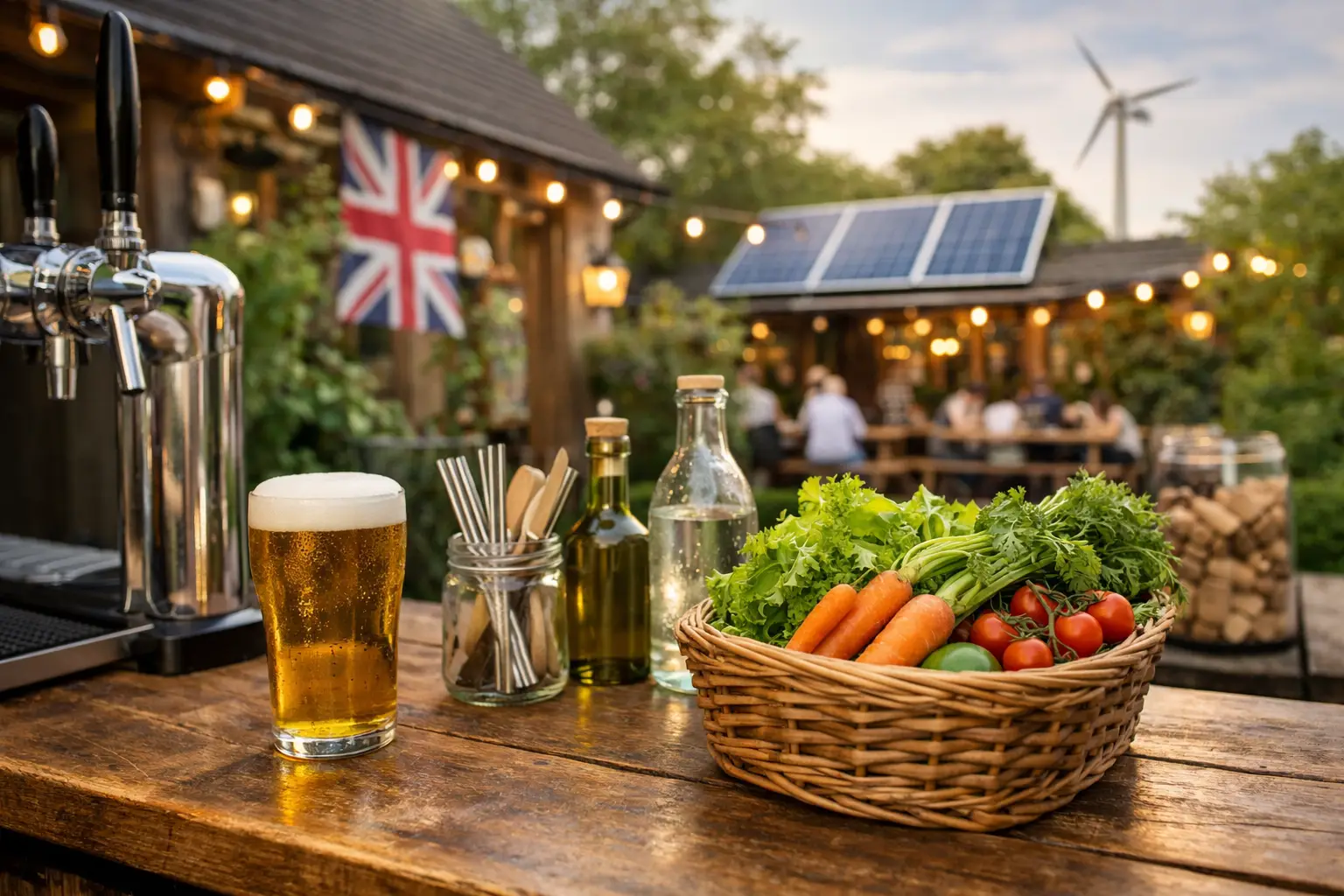
Beer gardens need thought too. Outdoor heaters have their place on a chilly evening, especially where accessibility or comfort is a concern, but leaving them running across empty tables is hard to justify. Sheltered seating, blankets, planting and sensible layout can extend the season with less energy. A well-kept garden that works in daylight is usually more inviting than a row of heaters fighting the British weather.
Local sourcing means more than putting a place name on a menu
Supporting nearby breweries, farms, bakeries and producers can give a pub a genuine point of difference. It gives regulars something to talk about and visitors a taste of the area beyond the standard national brands. A guest ale from a brewery down the road or cheese from a local dairy can make a pub stop feel more rooted in its community.
Still, local sourcing works best when it is honest. Not every ingredient can come from nearby, and not every small supplier can provide year-round consistency. Coffee, citrus, wine and many spirits have long supply chains. Good pubs do not pretend otherwise. They focus on the areas where a local relationship makes operational and culinary sense, then communicate it clearly without making inflated claims.
Community matters here too. Pubs that host repair cafés, surplus-food collections, local growers’ events or charity evenings can become useful neighbourhood spaces as well as places for a pint. These events need to suit the venue and its regulars. A small rural local and a city-centre craft beer bar will approach this very differently, and that is fine.
What pub-goers can do
Sustainable choices are not solely the landlord’s job. The way we use pubs has an impact, particularly when visiting in groups or planning a day out. Ordering what you genuinely want, returning glasses, avoiding needless waste and being considerate around outdoor spaces all help staff run the venue well.
If you are organising a crawl, choose a walkable route or use public transport where possible. It makes the day easier, reduces reliance on taxis between every stop and gives you more time to enjoy the places you have picked. Build in food, water and a sensible pace – the aim is to remember the pubs, their beer and the people you went with.
When searching for pubs near you, look beyond a single sustainability label. Read recent pub reviews for clues about beer quality, menu changes, garden upkeep and the overall feel of the place. Community feedback often reveals whether a pub’s claims are backed up by everyday standards. The Pubs Near Me: Pub Finder UK app can also help you save favourite pubs, plan a more manageable route and track the venues you have visited, which is handy when building an ale trail over several weekends rather than cramming it into one afternoon.
Questions worth asking at the bar
There is no need to interrogate busy staff during the Friday rush. But if a pub talks about sustainability, a couple of friendly questions can be revealing. Which local breweries do they work with? Does the menu change with the seasons? What happens to food waste? Staff who are proud of practical improvements will usually be happy to explain when they have a moment.
It is also worth rewarding effort. Choose the pub that keeps its cask ale well, uses its garden thoughtfully, offers decent alcohol-free options and gives local producers a fair showing. Leave an honest, balanced review afterwards. Mentioning a great seasonal dish or a brilliantly maintained beer garden is useful information for other pub-goers and gives good operators a reason to continue.
The sustainable pub is still, first and foremost, a good pub
The strongest sustainable pubs do not trade warmth and character for worthy messaging. They make choices that improve what matters: fresher beer, better food, more comfortable spaces and a closer connection to the people around them. That is a much better standard than a token green gesture.
Next time you are choosing where to meet friends, consider the small signs as well as the obvious ones. A pub that cares about its stock, its suppliers, its building and its neighbourhood is often a pub worth returning to.