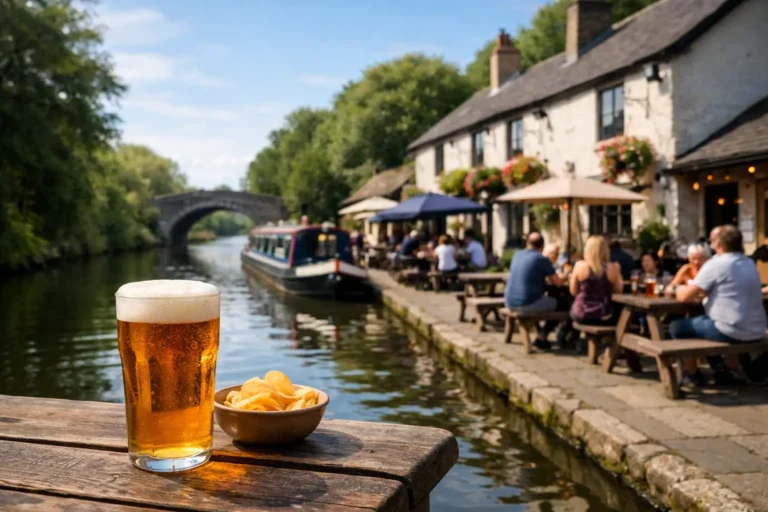
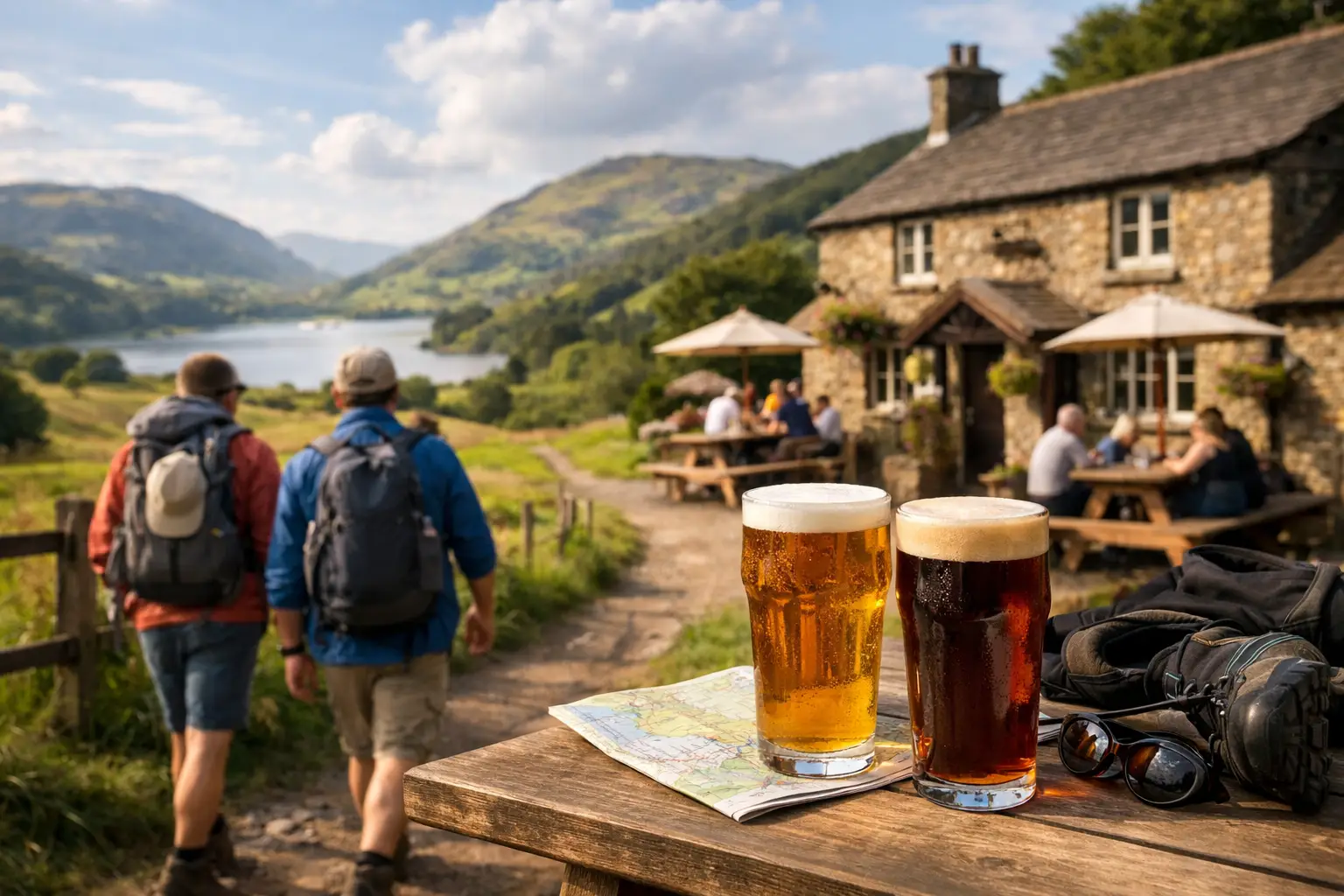
A good walk earns its pint. That is the simple appeal behind a proper guide to scenic ale walks: a few hours outdoors, a route with something worth looking at, and a welcoming pub where muddy boots, a decent cask ale and an unhurried lunch all feel entirely appropriate. Done well, it is one of Britain’s best day-out formats – sociable without being frantic, active without turning into an expedition.
The trick is not simply choosing a lovely-looking path and the nearest pub. The best ale walks balance distance, terrain, opening hours, food, public transport and the realistic pace of the group. A riverside ramble ending at a village local needs different planning from a hill walk with a remote inn halfway round.
Why scenic ale walks are worth planning properly
A scenic walk gives a pub visit a sense of occasion. You notice the first warm room, the clink of glasses and the sight of handpulls rather more after a blustery stretch across a moor or a woodland climb. It also encourages a more relaxed way of seeing a place. Rather than driving straight to a destination, you pass old bridges, towpaths, field boundaries, market squares and villages that would otherwise be missed.
There is a practical benefit too. A planned route makes it easier to enjoy one or two quality pints without relying on a car. Rail stations, bus stops and circular walks are especially useful, while a final pub close to public transport removes the awkward question of how everyone gets home.
Not every walk needs dramatic scenery. A canal route through an industrial town, a coastal path above a harbour or a city edge walk through parkland can be just as satisfying as a fell or a valley. What matters is that the route and the pub suit each other.
A guide to scenic ale walks: start with the route
Plan backwards from the pub experience you want. If the main aim is a long lunch beside a fire, choose a short, forgiving route that finishes near the pub. If your group is keener on walking than lingering over food, a mid-route stop at a country inn may work better, followed by a shorter leg to the station or car park.
For most mixed groups, four to seven miles is a sensible range. That usually allows time for photographs, navigation pauses and a proper stop without turning the day into a race against last orders. Hills, mud, stiles and children or dogs can make a modest distance feel much longer, so judge the route by effort rather than mileage alone.
Choose a route with a clear finish
Circular walks are convenient if you need to return to a car, but linear routes can make for a better day. A walk from one station to another, ending near a pub, feels purposeful and means nobody has to retrace their steps after a pint. Coastal rail lines, canal paths and old railway trails are particularly good for this.
Check the ground conditions before setting off. Chalk paths can be firm in dry weather but slippery after rain; woodland tracks can hold deep mud well into spring; exposed upland routes demand proper layers even on a bright day. A scenic ale walk should feel enjoyable, not like a test of endurance in soggy trainers.
Carry water, a charged mobile phone, a paper map or downloaded route, and enough snacks to avoid arriving at the pub ravenous and rushed. If the forecast is changeable, bring a waterproof and a spare layer. Country pubs are relaxed places, but it is still worth cleaning the worst of the mud from boots before heading inside.
Pick pubs for more than the postcode
A pub at the end of a route should be chosen with the same care as the route itself. Look for clear opening times, especially on quieter weekdays, and check whether food is served all afternoon or only at set lunch and evening sessions. A beautiful village pub is no use as a finish if the kitchen has closed and the next bus is two hours away.
For ale drinkers, a smaller but well-kept selection is often preferable to a long list that moves slowly. A couple of regularly changing local cask beers, knowledgeable staff and busy handpulls are encouraging signs. If some of the group prefer lager, cider, soft drinks or a decent coffee, make sure the pub caters comfortably for them too. A good ale walk is not improved by making anyone feel like an afterthought.
Atmosphere matters. Some walkers want a traditional bar with dogs under tables and a fire going; others would rather have a sunny beer garden, a view across the valley or a food-led pub where booking ahead is essential. Honest pub reviews are useful here because they reveal the details that menus and photographs often miss: whether walkers are welcome, whether there is room for wet coats, and whether the setting is peaceful or more of a lively weekend meeting point.
Scenic settings that suit an ale walk
Britain offers no shortage of strong combinations, and the best choice depends on season, fitness and how far you are travelling. The Yorkshire Dales and Peak District suit those after stone villages, broad views and traditional inns, though popular routes can be busy at weekends. The Lake District delivers unforgettable scenery, but steep ground and sudden weather mean it is better for walkers who are properly prepared.
For gentler days, the Cotswolds, the Chilterns and the South Downs offer rolling paths, market towns and plenty of village pubs within manageable distances. These areas are ideal for a Sunday stroll, although booking is sensible where a well-regarded pub is the obvious lunch stop.
Coastal routes bring a different sort of reward. Northumberland, Pembrokeshire, Cornwall and the Norfolk coast all offer walks where a sea view can lead naturally into a harbour pub or a tucked-away local. Tides, cliff paths and wind exposure need attention, but a shorter coastal section is often enough to feel like a proper escape.
In Scotland, lochside paths and Perthshire woodland walks can pair beautifully with characterful inns, while Wales has everything from gentle canal towpaths to demanding mountain country. Northern Ireland’s coastal and forest walks are equally good for pub-bound exploring, particularly when you build the day around a town with straightforward bus or rail links.
Do not overlook urban edges either. Many of the best pub days start with a train into a city, follow a river, park or historic district, then finish in a proper ale house. This option is especially useful in winter, when a shorter route and plenty of shelter can be more appealing than a long exposed hike.
Keep the day sociable and sensible
Pace is the difference between a memorable ale walk and a muddled one. Agree the plan before the first pint: where you are stopping, how long for, and how everyone is getting home. If the pub is midway, keep drinking moderate and save the fuller tasting session for the end. Footpaths, gates and uneven ground are easier to handle with a clear head.
One person should have the route saved on their mobile phone, but it is wise for another walker to know the basics too. Signal can disappear surprisingly quickly in valleys and remote countryside. Let someone outside the group know where you are going if the route is isolated, and be willing to shorten the walk if weather, daylight or tired legs suggest it.
For planning outings with friends, the Pubs Near Me: Pub Finder UK Android app can help you find pubs nearby, save favourite pubs, build a pub crawl, track pubs visited and record beers worth ordering again. It is particularly handy when a planned stop is unexpectedly closed or the group decides it has time for one more nearby pint.
Be a good guest on the path and in the pub
Stick to marked routes, close gates as you find them and keep dogs under control around livestock. Do not treat a pub garden as a changing room or a place to leave muddy bags across empty tables. A quick word when arriving with a larger walking group goes a long way, particularly at a small village pub with limited space.
If you are booking food, give an honest estimate of arrival time and phone ahead if the group is delayed. Country staff are often juggling a busy kitchen with a compact team, and a little consideration helps keep these pubs welcoming for walkers.
Let the pint mark the place
The best scenic ale walks are not about ticking off miles or chasing the strongest beer on the board. They are about arriving somewhere with a story: a pub beside a canal, a low-beamed local after a field path, a harbour bar following a windy stretch of coast. Choose a route that leaves room to look around, order well and get home safely, and the pint at the end will feel exactly as it should – well earned.