A good pub dog is a joy to have around: settled beneath the table, accepting the occasional friendly hello and making a rainy Sunday lunch feel even cosier. But dog friendly pub etiquette is about more than turning up with a lead and hoping for the best. It is the small decisions – where you sit, when you visit and whether your dog is genuinely comfortable – that make the outing pleasant for your party, other guests and the pub team.
Britain’s best dog-friendly pubs tend to strike a careful balance. They welcome four-legged regulars warmly, while protecting the relaxed atmosphere that everyone has come in for. A little consideration from owners helps them keep doing exactly that.
Check the pub’s dog policy before setting off
‘Dog friendly’ can mean different things from one pub to the next. Some welcome dogs throughout the bar and garden but keep dining areas pet-free. Others allow them inside only at quieter times, or ask that they stay on the lead at all times. A country inn may be set up for muddy walkers, while a compact city pub might have room for only one calm dog tucked beneath a table.
Check the venue’s current policy before you leave, particularly if you are booking food, visiting with more than one dog or heading out on a busy weekend. A quick call can save an awkward arrival and lets staff suggest the best area to sit. It is also worth checking whether the garden is open and practical for dogs rather than assuming outdoor tables are available year-round.
Assistance dogs are different from pet dogs and have legal protections around access. Even so, letting the pub know your plans where possible can make arrival smoother, especially at a busy venue.
Dog friendly pub etiquette starts before the first pint
The fairest question is not ‘Does this pub allow dogs?’ but ‘Will my dog enjoy this pub today?’ A sociable, settled dog may be perfectly happy at a quiet local. A nervous pup, a dog in training or one that finds strangers, children or other dogs difficult may be happier with a short walk and a garden stop instead.
Before heading in, give your dog a proper chance to exercise and go to the toilet. Take water, poo bags, a short lead and something familiar to settle on, such as a small blanket or mat. A chew can help some dogs relax, although avoid anything likely to create a mess or spark possessive behaviour around nearby dogs.
Do not arrive with a soaked, muddy dog and assume the pub will simply cope. Plenty of rural pubs expect walkers, especially near trails and beaches, but towels, a quick wipe-down and a sensible choice of entrance show consideration. The same applies after a day at the park: an energetic dog may need a little more walking before being asked to lie still for an hour.
Choose your table with the room in mind
Where you sit can make or break the visit. Avoid narrow walkways, the route to the loos, the bar queue and doorways where people are constantly arriving. These are pressure points for staff carrying glasses and plates, as well as for dogs who can become alert each time somebody passes.
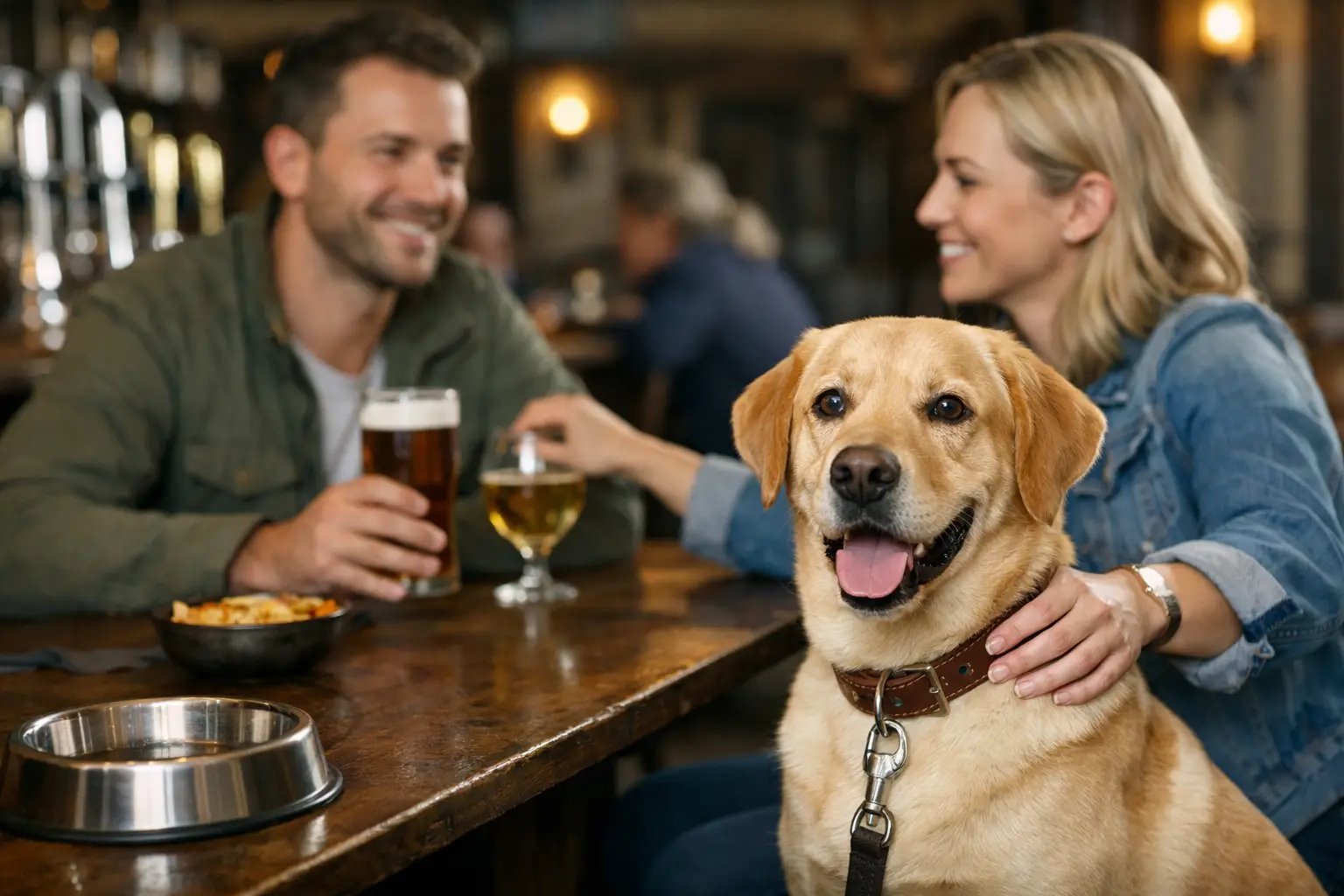
A corner table with space beneath it is usually ideal. Keep your dog close to you, rather than stretching a lead across the floor where someone could trip. Retractable leads are rarely a good fit indoors: they make it too easy for a dog to reach another table before you have noticed.
If your dog needs more space, ask whether a quieter corner or garden table is available. A good pub team would rather help you get settled than deal with a preventable scramble later on.
Keep greetings brief and optional
Dogs naturally draw attention in pubs, and many guests will be delighted to say hello. Let your dog decide whether they want the interaction. There is no need to encourage every person who walks past to fuss them, particularly when food is on the table or your dog is resting.
Ask before allowing your dog to approach another dog, even if both tails are wagging. Dogs on leads cannot always move away easily, and a friendly-looking encounter can quickly become uncomfortable in a tight space. If another guest asks you to keep your dog away, take it in good spirit. They may be allergic, nervous around dogs or simply enjoying a meal without company.
Food, bowls and the bar area
Pubs are working hospitality spaces, not just your sitting room with better ale. Keep dogs away from the bar, where staff are moving quickly with hot food, full glasses and cleaning equipment. It is usually best for one person to stay at the table while another orders, especially if your dog is likely to become unsettled in a queue.
Water is essential, particularly in warm weather or after a long walk. Use a collapsible bowl or ask if the pub can provide one, then place it where it will not be kicked over. Do not let your dog drink from communal bowls unless you are comfortable with the hygiene and the pub provides them specifically for that purpose.
Human pub food is not always dog-safe. Onion, garlic, cooked bones, rich gravy, chocolate and alcohol are all reasons to keep your dog’s nose away from dropped scraps and unattended plates. If the pub sells dog treats or a canine menu, that is a nice extra, but it should not become an excuse for begging at other tables. Reward calm behaviour from your own hand rather than feeding your dog from the plate.
Know when the pub is too busy
Timing matters. A relaxed midweek afternoon can be very different from a packed Friday evening, a live music session or a match-day crowd. Even a normally chilled dog-friendly pub can become loud, cramped and unpredictable when every table is taken.
Watch your dog rather than focusing only on your plans. Repeated yawning, lip licking, pacing, trembling, fixed staring, whining or attempts to hide can all suggest they are overwhelmed. Barking is not always bad manners – it can be a signal that your dog has had enough. The kindest response is to take them outside for a short break or call it a day, not to tell them off and carry on.
There is a trade-off here. Pubs are social places, and dogs do not need to be perfectly silent or motionless to be welcome. A brief excited woof after the door opens is not a disaster. Constant barking, jumping up at guests or lunging towards passing staff is different, because it stops others enjoying the space safely.
Be considerate of staff and fellow pub-goers
Staff should not have to step around your dog, clean up accidents or manage difficult interactions while they are serving a busy room. If an accident happens, tell a member of staff immediately, clean what you can and offer to cover any extra cleaning needed. It is embarrassing, but how you handle it matters far more than pretending it did not happen.
Keep your dog off seats unless the pub explicitly says otherwise. Even then, a blanket is sensible, especially in food-led venues. Do not tie a lead to a table that could tip, and never leave a dog unattended outside while you go in for a drink. Aside from the risk to your dog, it can create noise, distress and a difficult situation for the pub.
A friendly word and a thank you go a long way. Dog-friendly pubs take on extra cleaning, space and occasional disruption because they value the custom of local dog owners, walkers and visitors. Treating that welcome as a privilege rather than an entitlement helps protect it.
Make pub visits part of good dog training
For young or excitable dogs, start small. Choose a quiet time, sit outside or near an exit, order one drink and leave while the experience is still positive. Gradually build up to a meal or a longer stay as your dog learns that a pub means settling beside you, not greeting every person in the building.
It helps to practise a few basics beforehand: settling on a mat, coming away from distractions, walking calmly on a short lead and responding to a quiet cue. You do not need a competition-standard dog. You do need enough control to prevent your dog becoming someone else’s problem.
If you are trying new places, Pub Reviews UK’s Pubs Near Me: Pub Finder UK app can be useful for saving dog-friendly favourites and noting which venues suited your dog best. Over time, you will find the pubs where both of you can properly relax – perhaps a garden with room to spare, a snug that welcomes regulars or a post-walk local with a bowl of water by the door.
A well-chosen pub visit should leave everyone content: your dog has had a change of scene, you have enjoyed a proper pint or lunch, and the pub is happy to see you both again. That is the sort of regular worth becoming.