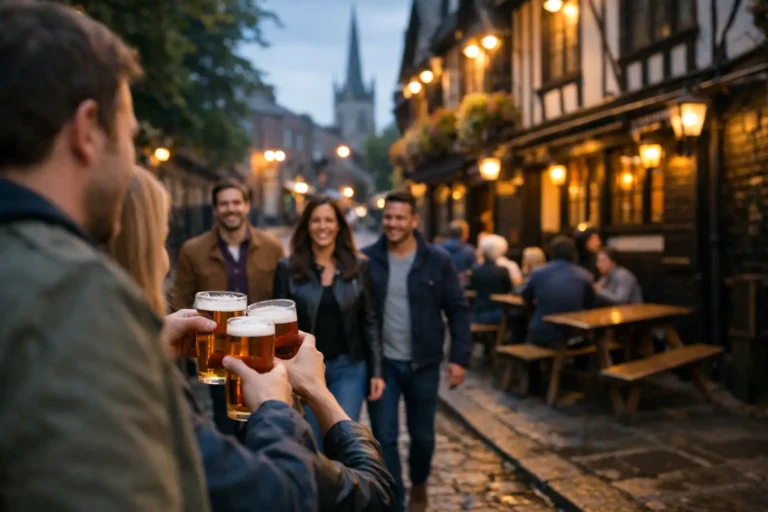
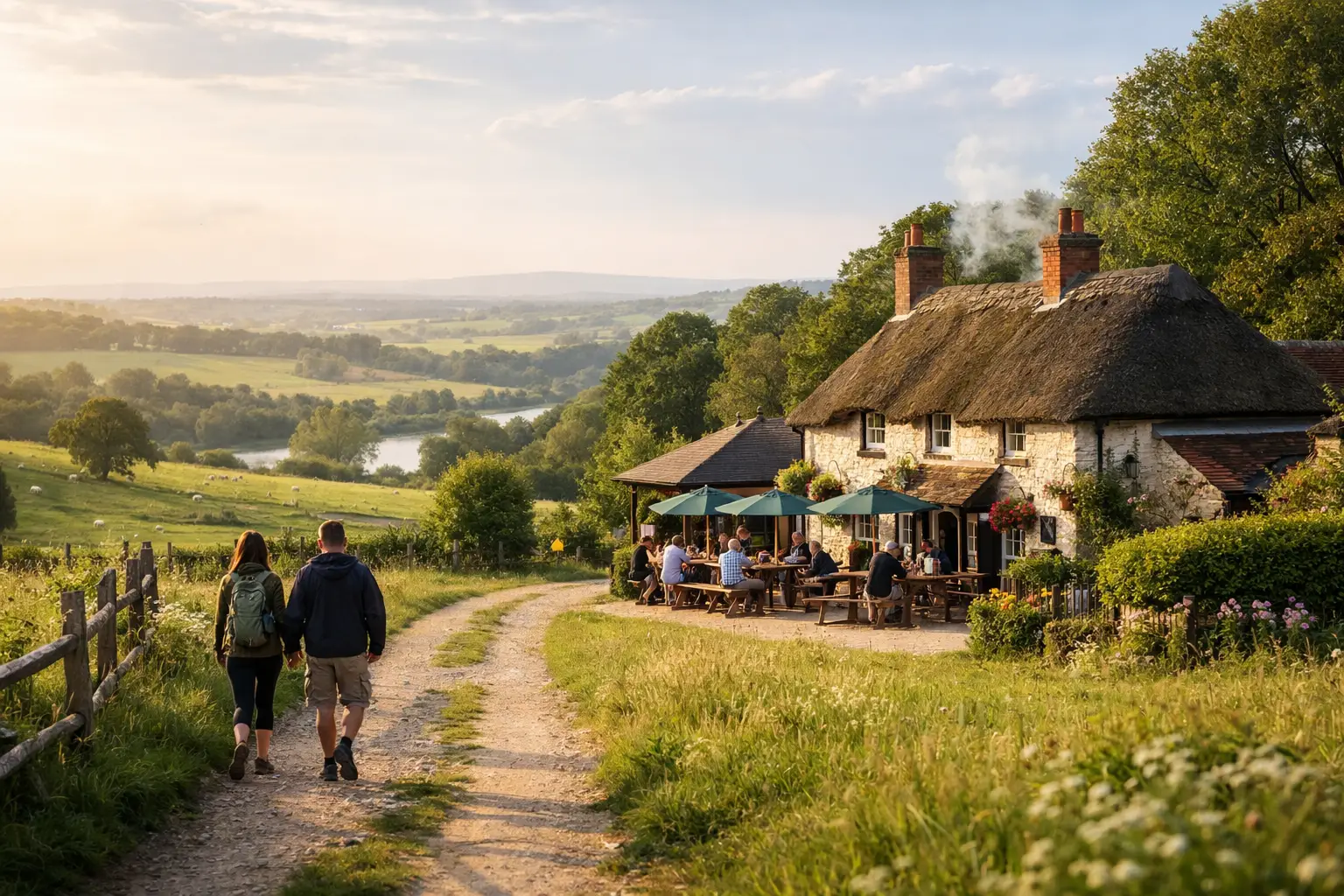
A proper countryside walk feels even better when there is a good pub at the turning point. The best scenic countryside pub walks are not about racing to a roast or squeezing in as many miles as possible. They are about a steady path through fields, woods, river valleys or moorland, followed by a pint in a pub with real character.
Britain is made for this sort of day out. Public footpaths often run close to village greens, old coaching inns and small market towns, while many rural pubs understand the value of muddy boots, damp dogs and walkers arriving just before the kitchen closes. A little planning makes the difference between an easy-going afternoon and a hungry trudge along a road with nowhere open.
What makes a countryside pub walk genuinely good?
A great route needs more than attractive views and a pin on a map. The pub should fit naturally into the day, whether it is a halfway stop for soup and a pint or the warm finish after a circular walk. A place with cask ale, decent food, a fire in colder months or a sunny garden in summer earns its place, but timing and location matter just as much.
The walk itself should have a clear character. That could be a riverside ramble with kingfishers and canal locks, a stretch of chalk downland with wide views, or a woodland route where bluebells briefly take over in spring. A route that spends most of its time on busy lanes may still lead to a lovely pub, but it is unlikely to feel like the countryside escape people had in mind.
There is also a practical point: the best walks give you options. A shorter loop is useful if the weather turns, the ground is boggier than expected or lunch has become a pleasantly long affair. A longer extension suits walkers who want to earn their Sunday lunch. Neither is better – it depends on the group, the season and how much daylight you have left.
Planning scenic countryside pub walks without the faff
Start by choosing the pub, then work backwards. Look at its opening hours, food service times and whether booking is sensible, especially on Sundays and bank holidays. Rural pubs can be wonderfully relaxed, but their kitchens may close between lunch and dinner, and a small village pub may not have room for a large walking party at short notice.
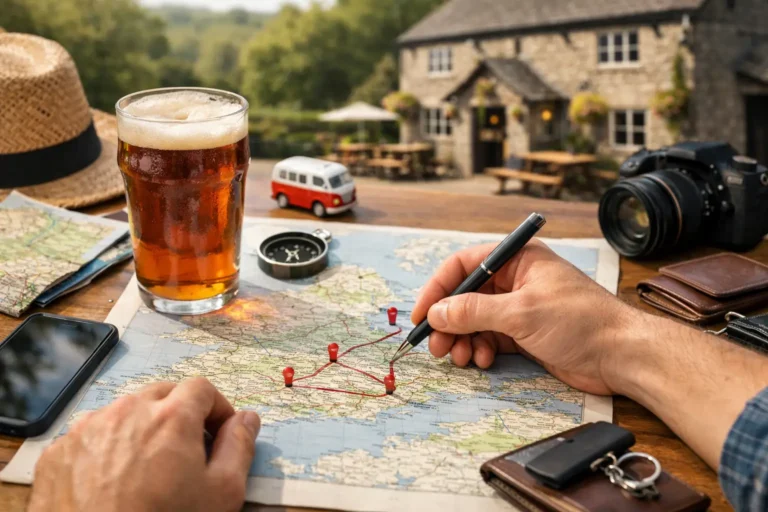
Next, check the route in detail rather than relying on a rough distance. Six miles across flat riverside paths is a very different prospect from six miles over steep, exposed hills. Look for stiles, livestock fields, river crossings and sections likely to become muddy after rain. It is worth downloading an offline map or carrying a paper one too, as phone signal can fade quickly outside villages.
Public rights of way are not always obvious on the ground. Footpath signs can be hidden by hedges, gates can look more private than they are, and a well-trodden trail may lead in entirely the wrong direction. Give yourselves time to stop, check the map and enjoy the view rather than treating navigation as a nuisance.
For groups meeting from different places, think about the finish. A circular walk from the pub is the simplest arrangement, as everyone can leave their cars safely after food and soft drinks or a modest drink. If you are using public transport, check the last bus or train before setting off. A glorious sunset is less charming when it comes with a three-mile walk along an unlit lane to the station.
Picking the right pub for the route
Not every country pub is set up for walkers, and that is perfectly fair. Some are food-led dining rooms, some have limited daytime hours, and some sit beside narrow roads with little safe parking. A few quick checks help you find the right fit.
A walker-friendly pub usually has somewhere to leave boots outside or by the door, staff who do not mind a muddy spaniel under the table, and a menu that works for both a light stop and a fuller meal. A proper local atmosphere is often a bonus too. There is something reassuring about arriving in a village pub where the bar has a handpump selection, a noticeboard full of local events and regulars discussing the weather.
Beer gardens can be ideal after a summer ramble, but do not assume they will be sunny, sheltered or available. In the colder months, a pub with a fire, a snug or a quiet corner can make a wet walk feel entirely worthwhile. If cask ale is part of the plan, remember that range changes quickly in rural pubs. A smaller choice that is well kept is usually a better sign than a crowded board of unfamiliar beers.
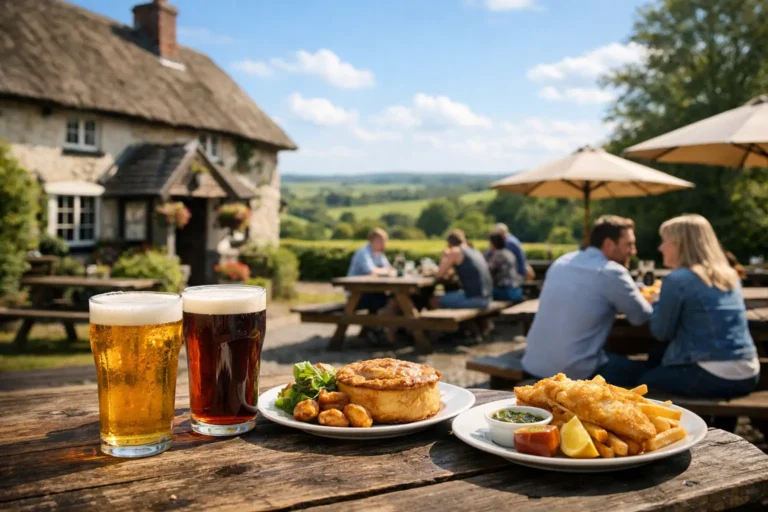
Food is often the deciding factor. Some walkers want a pork pie and a packet of crisps before carrying on; others are building the route around a Sunday roast. Check whether the pub serves food all afternoon, and do not leave a large group’s booking until the last minute. It is also sensible to bring water and a snack, rather than assuming the pub will be open exactly when you arrive.
Routes that work in every season
Spring is ideal for woodland paths, lamb-filled fields and walks that finish before the evening chill sets in. It is also a muddy season, so waterproof boots are more useful than they may appear from the kitchen window. Bluebell woods can be busy, but an early start followed by a relaxed pub lunch is hard to beat.
Summer brings long evenings, beer gardens and the chance to make a day of it. Carry more water than you think you need, particularly on open hills or coastal paths. Shaded woodland and river walks are often more comfortable than exposed routes in hot weather, while a late-afternoon walk can avoid the busiest part of the day.
Autumn may be the finest pub-walk season of all. The colours are doing their work, the air is cooler, and a pub meal feels deserved rather than inevitable. Expect leaf-covered paths, earlier sunsets and softer ground. Take a torch if there is any chance that the final stretch will be in fading light.
Winter needs a little more caution but offers quieter trails and the particular pleasure of returning to a warm pub. Keep the route short, know where you are going, and avoid committing to waterlogged fields or high ground in poor weather. A two-hour loop with a good lunch waiting at the end is plenty on a grey January day.
Keep the day sociable and sensible
The pub should be a rewarding part of the walk, not the reason to lose track of the route or the journey home. Pace drinks sensibly, eat properly and make sure the designated driver sticks to soft drinks. If everyone wants to enjoy a pint, choose a route reachable by train, bus or taxi, or stay nearby for the night.
Be considerate on the paths as well. Keep dogs under control around livestock, close gates unless they are clearly meant to stay open, and give other walkers room at narrow points. Muddy boots are part of the deal, but a quick wipe before entering the pub is a small courtesy that staff and fellow customers will appreciate.
For regular walkers, saving reliable stops makes future plans much easier. The Pubs Near Me: Pub Finder UK app can help you find pubs nearby, save favourite pubs, track pubs visited and build a simple pub crawl for a weekend away. It is particularly handy when a walk finishes in a town with more than one tempting option.
Make the pub part of the place
The memorable countryside pub walks are rarely the ones with the most dramatic mileage. They are the routes where the landscape, village and pub feel connected: a path past an old mill, a bridge over a clear stream, then a seat by the fire with a well-kept pint. Choose a route that suits the day, respect the countryside and leave enough time to enjoy the pub you walked to find.