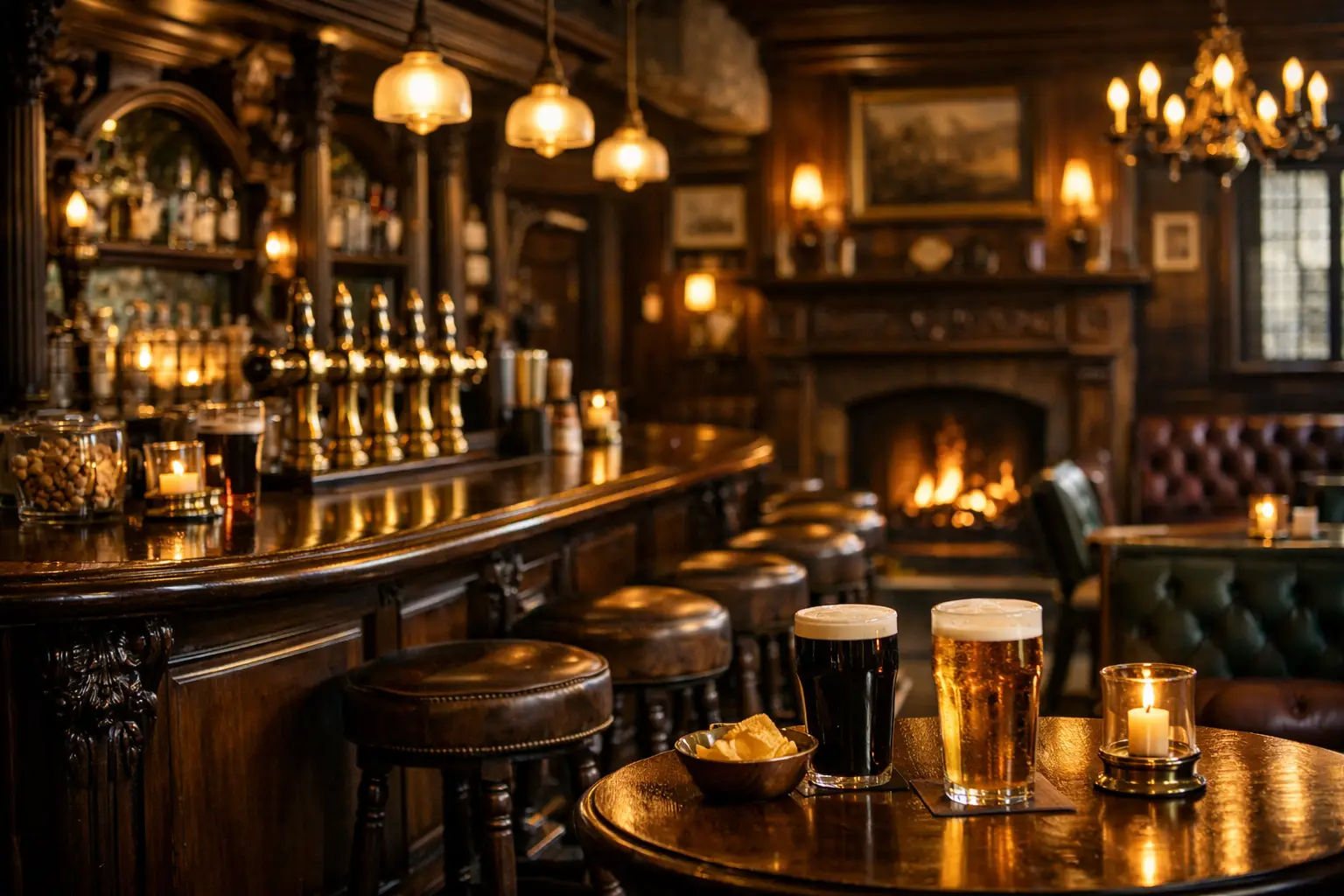
You can usually tell within ten seconds. A pub with real age has a different feel before you even reach the bar – etched glass catching the light, worn timber that has earned its scratches, a snug that seems built for proper conversation rather than laptops and cocktails. The historic pub interiors trend is growing because plenty of drinkers want that feeling back. Not fake old-fashioned decor, but spaces with genuine character, texture and a sense that the place has actually lived.
That matters because pub choice is rarely just about what is on draught. People are picking venues for atmosphere, comfort and story as much as beer range or menu. A striking interior can turn a quick pint into a longer stay, and a decent pub stop into the highlight of a day out. For anyone planning a crawl, a weekend away or just trying to avoid another bland chain fit-out, historic interiors have become a proper draw.
Why the historic pub interiors trend has taken off
Part of it is simple fatigue. After years of polished concrete, exposed ducting and interchangeable bars, many pub-goers are looking for places that feel rooted rather than designed by template. Historic interiors offer the opposite of generic. They come with quirks, awkward corners, old fireplaces, carved back bars, brass fittings and room layouts that were shaped by habit long before anyone talked about customer flow.
There is also a wider pull towards heritage and local identity. Pubs have always been one of the easiest ways to understand a town or city, and interiors play a big part in that. A tiled Victorian gin palace in London tells a different story from a dark-panelled ale house in Yorkshire or a maritime boozer with old shipyard touches in Liverpool. When people travel in Britain now, they are often after something place-specific. Historic interiors deliver that in a way more polished venues often cannot.
Social media has helped, but not always in the obvious way. Yes, ornate ceilings and stained glass photograph well. But the bigger change is that pub-goers now swap recommendations based on feel. They are not just asking where serves a good pint. They are asking where has a proper snug, where still has screens, where has original tiling, where feels untouched in the best sense. That has made interior character part of pub discovery rather than just a nice bonus.
What actually makes a pub interior feel historic
A lot of people use the word historic when they really mean traditional-looking. They are not always the same thing. A genuinely historic interior usually has layers to it. You might see original bar counters, old bench seating, frosted partitions, timber panelling, ceiling mouldings, bell pushes or tiled corridors that were built for another era of pub-going.
What gives these places their pull is that the details work together. It is less about one showpiece feature and more about the full setting. The room proportions are often different from modern bars. Spaces can feel smaller, lower-lit and more intimate. Instead of one big open plan drinking room, there may be separate areas with their own mood – saloon, lounge, snug, taproom. That creates a more relaxed social rhythm, especially if you are meeting friends rather than chasing a loud Friday night.
Of course, not every old pub has kept its original fittings, and not every refurbished pub gets it wrong. Some have been sensitively restored and are better for it. Others keep the right materials but lose the atmosphere by over-styling everything. It depends on whether the place still feels natural. If every surface looks distressed on purpose, people tend to notice.
The line between heritage and theme pub
This is where the trend gets a bit tricky. There is growing demand for pubs that look historic, so some venues lean hard into nostalgia. Old signs, dark paint, reclaimed wood and vintage mirrors can create a decent look, but style alone is not the same as substance.
That does not mean newer pubs cannot be enjoyable. Plenty are. It just means that if you are specifically chasing character, it is worth looking beyond the first impression. Ask whether the layout feels authentic. Notice whether the fittings belong to the building or have simply been added. See if the pub has the ease of a lived-in local rather than the polished mood of a set design.
For many drinkers, the sweet spot is a pub that respects its history without turning it into theatre. A little wear and tear helps. So does furniture that feels used rather than staged. The best historic interiors are convincing because they do not try too hard.
Why these pubs work so well for real pub-going
Historic interiors are not just visually appealing. They tend to support the kind of social experience many people want from a pub. Separate rooms make conversation easier. Booths and snugs suit small groups. Older bars often have a stronger sense of pace, where settling in for a couple of pints feels more natural than standing awkwardly near a speaker.
That is one reason these pubs are so good on a crawl or city break. They create contrast. If every stop looks and feels the same, the night blurs together. A pub with etched windows, a tiled exterior or a brilliant old back bar gives the evening shape. It becomes somewhere you remember, not just somewhere you passed through.
They can also suit mixed groups better than trendier venues. The person after cask ale, the friend who wants somewhere quiet enough to talk, and the visitor keen on local history can all get something from the same place. That kind of broad appeal is useful when you are planning a route and trying to keep everyone happy.
Spotting the best examples of the historic pub interiors trend
If you are using the historic pub interiors trend as a way to choose where to go, a bit of selectiveness helps. Good historic pubs do not always shout about it, and not every old-looking venue is worth the detour.
Start with the basics. Photos can tell you a lot, especially if they show the actual bar and seating rather than just close-ups of pints and Sunday roasts. Look for original features, room divisions and signs of genuine age rather than a recently applied vintage filter. Community reviews are useful here too, because regulars and visitors often mention atmosphere in a way official descriptions do not.
If you are out exploring somewhere unfamiliar, it is handy to save a few promising options before you head off. Using a pub finder app to compare nearby pubs, save favourite pubs and track pubs visited makes it easier to build a route around places with real character rather than ending up in the nearest obvious chain. That is especially useful in city centres where the choice is broad but quality varies street by street.
Not every historic interior means a better pub
There is a trade-off worth mentioning. A beautiful old interior does not guarantee a brilliant pint, friendly service or a pub you will want to stay in all evening. Some heritage-heavy venues trade a bit too much on looks. Others are so popular that they can feel more like attractions than locals, especially at peak tourist times.
On the other hand, some of the best pub experiences happen in places that are less dramatic but still full of quiet character – old tiled floors, proper seating, a well-kept bar and a room that feels settled. If you only chase the most photogenic interiors, you can miss very good pubs that have history without the fanfare.
That is why balance matters. Interior character should be part of the decision, not the whole decision. Beer quality, welcome, pricing, food if you want it, and whether the atmosphere suits your plans still count.
Historic pub interiors trend in modern refurbishments
One of the more interesting parts of the trend is how it is influencing newer refurbishments. Plenty of pubs are now bringing back elements that had been stripped out over the years. Screens are being reinstated. Timber is replacing generic finishes. Lighting is getting warmer. Rooms are being made more intimate again.
When it is done well, this can genuinely improve a pub. Many pubs lost their best features in refits that chased open-plan uniformity. Restoring some of that structure can make them more comfortable and more distinctive. It can also reconnect the pub to its local history in a useful way, rather than treating heritage as an afterthought.
Still, there is a difference between restoration and approximation. Real conservation takes care, money and a bit of humility. It respects what is already there. Trend-led imitation can look the part for six months but often dates quickly. Pub-goers are usually quite good at spotting the difference.
What this trend says about British pub culture
More than anything, the historic pub interiors trend shows that people still value pubs as places, not just service businesses. They want venues that feel social, local and memorable. They want rooms with atmosphere, signs of continuity and a bit of texture. In a country where pub culture is tied so closely to neighbourhood identity and everyday ritual, that makes complete sense.
It also says something encouraging about what drinkers reward. Character still counts. So does preservation. Pubs that keep hold of original features, or restore them with care, are not just protecting history for its own sake. They are offering a better experience in the present.
The next time you are picking somewhere for a pint, it is worth looking up from the pump clip and taking in the room. Sometimes the best pub decision starts with the door, the windows and the feeling that this place has been getting the basics right for a very long time.