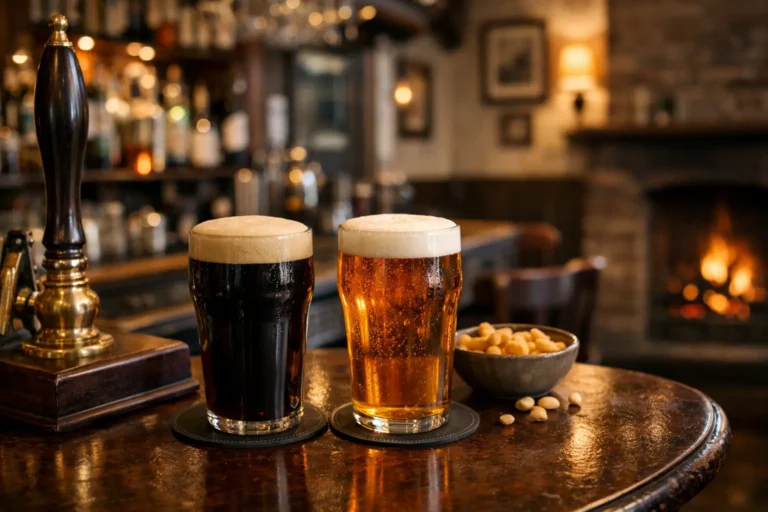
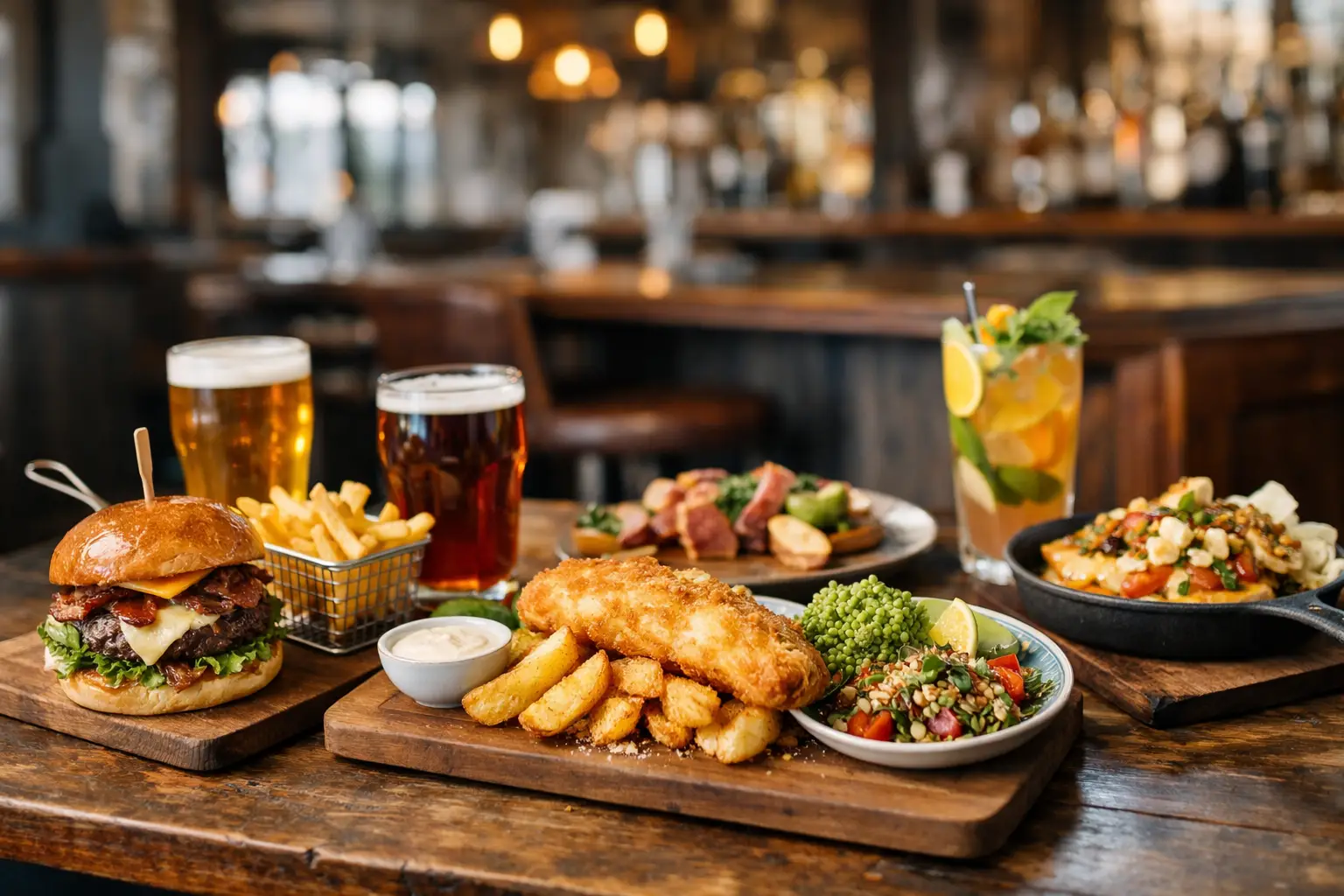
This is a 2026 menu-assessment guide, not a forecast or national trends survey. Treat the dishes below as examples rather than promises about what British pubs now serve. “Seasonal”, “local” and “homemade” do not by themselves prove provenance, cooking quality or value; look for specific information and complete prices. The CMA summarises price transparency.
Check hygiene separately through the FSA search, which is not a taste score. If anyone has an allergy, discuss it directly before booking and reconfirm on arrival using current GOV.UK guidance. Menus, ingredients and kitchen hours can change.
A good pub menu has always had a difficult job: it needs to please the walker with muddy boots, the family booking Sunday lunch, the couple after a proper meal and the regular who just wants a decent bowl of chips with a pint. This 2026 menu guide is not about binning off that familiar comfort. They are about doing it with more care, more local character and a bit more choice for everyone at the table.
For pub-goers, the useful question is whether a menu works for the table. Look for well-made classics, seasonal specials that genuinely change, better options for people drinking little or no alcohol, and food designed to suit a long lunch as easily as a quick post-work visit.
Pub food in 2026: assess the classics carefully
Start with whether familiar pub food is cooked and described well. It is the return of dishes people already know, made with better ingredients and clearer intent. A steak and ale pie still earns its place, but the pastry matters, the gravy should taste of the ale named on the menu, and the potatoes should not feel like an afterthought.
Fish and chips, sausage and mash, ham egg and chips, scampi and a proper Sunday roast remain pub menu essentials because they work. A kitchen can distinguish itself through the details: a good local butcher, hand-cut chips where the volume allows, a seasonal green vegetable rather than the same tired side salad, or a pickle made in-house.
That does not mean every pub needs to turn into a gastropub. A busy community local may be better served by a tight menu of reliable favourites than a two-page list of ambitious dishes. The point is consistency. If a pub promises a classic, it should arrive hot, generous and recognisable.
The pie is becoming a useful test
A pie can reveal whether a pub takes the details of its food seriously. Look out for proper shortcrust lids, slow-cooked fillings and regional combinations such as beef with local stout, chicken with leek and cider, or mushroom and blue cheese. Individual pies can look smart, but a hearty sharing pie is just as welcome when the table is there for a relaxed catch-up.
Vegetarian versions should be judged on their own merits too. A token goat’s cheese tart need not be the only meat-free pub option. A well-seasoned lentil and ale pie, roasted squash with Lancashire cheese, or a mushroom and pearl barley filling can feel every bit as satisfying as the meat-based equivalent.
Smaller plates, flexible meals and proper bar snacks
Not every visit calls for a main course. One practical menu approach is flexible ordering: dishes that work for a light lunch, a few shared bites over drinks, or a fuller meal built from several plates.
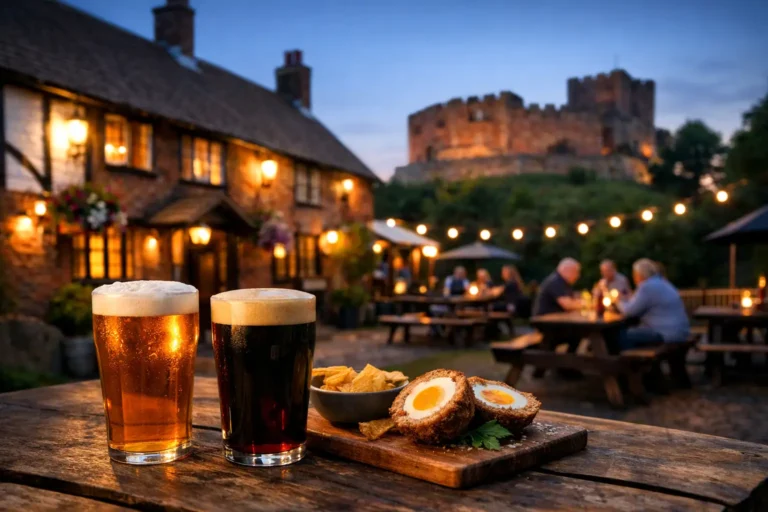
This is particularly useful in city pubs, where one group may be having a quick pint before a train while another has settled in for the evening. Better bar food gives everyone a reason to stay without making the menu feel restaurant-led. Think Scotch eggs with a runny yolk, crisp pork scratching with apple sauce, Welsh rarebit, smoked mackerel pâté, loaded skins or good-quality sausage rolls.
The best versions are simple and easy to share. They also need to be priced fairly. Small plates can become poor value when a table has to order five just to feel fed, so pubs should be honest about portion sizes and make it clear whether dishes are snacks or meal-sized.
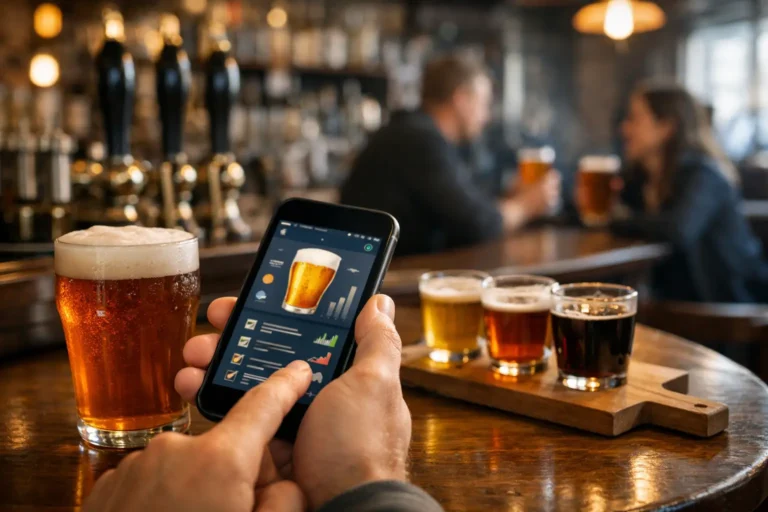
For groups planning a crawl, this is a welcome change. A decent snack in the first or second pub can make a day out more enjoyable and encourages a steadier pace. If you are mapping a route, the Pubs Near Me: Pub Finder UK app can help you save favourite pubs, track venues visited and build a pub crawl around places that suit the occasion.
Local produce with a reason to be there
Local sourcing is worth interrogating, but pub-goers are getting better at spotting vague claims. Listing a nearby farm or bakery means more when it connects to the dish: bread from the village bakery for a ploughman’s, sausages from a local butcher, cheese from the county, or a seasonal cider used in the kitchen.
Regional food is especially effective when it feels natural to the pub’s setting. A Cornish pub can make the most of its fish landing and local pasties; a Yorkshire pub has every reason to celebrate Wensleydale, rhubarb and proper puddings. Elsewhere, it may be a local brewery’s stout in the gravy or a nearby market garden supplying the greens.
Seasonality matters more than pretending every ingredient comes from ten miles away. British pubs are at their best when winter menus lean into braises, roots and puddings, while spring and summer bring asparagus, peas, berries, grilled fish and lighter salads. A concise specials board is often more convincing than a permanent menu trying to cover all four seasons at once.
Better choice for every table
The modern pub table is rarely made up of people ordering the same thing. Someone may want a pint and a burger, another a sparkling water and a small plate, another a plant-based main, and another a roast without the meat. Menus in 2026 need to make that feel normal rather than awkward.
Good plant-based food need not be about imitation and more about dishes with their own appeal. Charred cauliflower with spiced butter beans, a vegetable suet pudding, miso-glazed aubergine, or a winter squash risotto can be satisfying choices for anyone, not just a compromise for one guest. Good pubs will also keep allergens clear and staff properly briefed, particularly where sauces, gravies and fryers are concerned.
There is room for lighter options, but pub food should not become joyless. A well-dressed salad with grilled chicken or smoked trout is useful on a warm afternoon. It should sit alongside, not replace, the burger, the pie and the chips. Choice works best when nobody at the table feels they have drawn the short straw.
No and low drinks belong with the food
Food and drink matching is no longer only for wine lists. When pubs offer no and low alcohol options, they have a chance to treat them with the same respect as a cask ale or a glass of red. A good alcohol-free lager with fish and chips, a botanical cordial alongside a summer salad, or a decent no-alcohol stout with a sticky toffee pudding makes a meal feel more inclusive.
This matters for designated drivers, people pacing themselves, those taking a break from alcohol and anyone who simply fancies a different sort of drink. It is not about making a pub less pub-like. It is about ensuring that everyone can enjoy the atmosphere, food and company.
Pubs with thoughtful beer lists can go further by showing which cask ales work with particular dishes. A malty bitter alongside a steak pie or a bright pale ale with a spicy chicken burger can be more helpful than a generic suggestion to ask the bar staff. As ever, the recommendation should be a friendly nudge, not a rule.
Sunday lunch gets more considered
The Sunday roast remains one of the clearest reasons to choose a pub over staying at home. Judge a roast on the things that cannot be hidden: properly cooked meat or a substantial vegetarian centrepiece, crisp roast potatoes, seasonal vegetables, a good Yorkshire pudding where appropriate, and enough gravy.
Booking systems, clearer serving times and honest guidance on dog-friendly areas will become more important too. A roast can be excellent, but it is less enjoyable if the table feels rushed or the kitchen has run out by mid-afternoon. If Sunday lunch is the main event, check recent pub reviews and book ahead, especially at popular country pubs and city-centre favourites.
What makes a food-led pub worth choosing?
Trend-led menus are only useful when they suit the pub. A historic ale house may shine with a simple pie, sandwich and cheese board offer, while a destination pub with a skilled kitchen can justify more ambitious seasonal cooking. Neither approach is automatically better.
When choosing where to eat, look for a menu that matches the venue, recent comments that mention consistency, and dishes you would actually want to order. Check whether the pub caters for your group, whether food hours fit your plans, and whether the atmosphere suits a lingering meal or a quick stop. A quality pint, welcoming staff and a comfortable table still count for plenty.
The most promising pub food trend for 2026 is really a return to the point of the British pub: generous hospitality, good local flavour and a menu that gives people another reason to gather. Find a place doing the basics brilliantly, order something you fancy, and leave enough time to enjoy the conversation as much as the plate.