A good pub route is not about cramming in the highest possible number of pints. It is about giving each stop a reason to be there: a brilliant cask ale, a historic bar, a sunny garden, a decent pie, or simply the sort of local where everyone relaxes as soon as they step inside. This guide to pub route planning will help you shape a day out that feels sociable, straightforward and worth remembering for the right reasons.
Whether you are arranging a birthday crawl, showing visitors around a city, or setting off on an ale trail with a couple of mates, the best plans leave room for good conversation, changing weather and the occasional pub that proves too lovely to rush.
Start with the sort of pub day you actually want
Before pinning anything on a map, decide what the outing is for. A Saturday afternoon of heritage pubs needs a different route from a pre-match meet-up, a food-led Sunday ramble or a craft beer evening. Trying to make one crawl serve every possible taste often produces long walks, awkward detours and a group that cannot agree on the next stop.
Give the route a simple theme. It might be traditional city-centre pubs, riverside beer gardens, independent ale houses, live sport, or a mix of old boozers and modern beer bars. A theme does not mean every pub must look the same. It gives the day a bit of shape and makes decisions easier when there are hundreds of options nearby.
It also helps to agree on the pace early. Four well-chosen pubs across an afternoon can be far more enjoyable than eight rushed stops. If the group includes people travelling in, booking dinner, or catching the last train, build the route around those fixed points rather than treating them as an afterthought.
Guide to pub route planning: map the order, not just the pubs
The most common planning mistake is choosing several excellent pubs without checking how they connect. A route should flow in one direction where possible, beginning near a station, hotel or easy meeting point and ending somewhere with reliable transport home. Crossing a city centre repeatedly may look fine on a screen, but it soon eats into the time you wanted to spend in the pub.
Look at walking times between stops, including the less glamorous bits: road crossings, hills, cobbles and busy weekend streets. In compact places, ten to fifteen minutes between pubs is usually comfortable. In larger cities, it can make sense to use public transport once, then concentrate the rest of the crawl in one neighbourhood.
Think about the order of atmosphere too. Starting in a lively, standing-room-only bar at noon can feel flat, while finishing a relaxed Sunday route in a packed sports pub may not suit everyone. A useful pattern is to begin with a welcoming all-rounder, move into more distinctive venues, then finish at a pub where the group would happily settle for food or a final soft drink.
Check opening times, food service and bookings
Never assume a pub opens all day or serves food until closing. Many excellent places have limited weekday hours, afternoon breaks in the kitchen, private functions or different Sunday schedules. A pub that is perfect on paper is no use as a mid-route stop if the doors are shut when you arrive.
Check whether your group needs a table, especially for a meal stop. Booking can be sensible for a larger group, but it also makes the route less flexible. If you do reserve, allow a generous buffer before the booking rather than relying on everyone arriving at the same minute.
It is worth identifying one nearby alternative for each key stop. This is not a judgement on the original pub. It is simply good planning for a full beer garden, a last-minute event, a change of opening hours or a group that decides it would rather stay put.
Choose variety without making the route feel random
The strongest routes have contrast. A quiet Victorian corner pub feels even more special after a busy station-side pint, and a smart beer bar can work nicely after a proper traditional local. But contrast needs a little common sense. If one stop is a 25-minute walk away from every other venue, it needs to offer something genuinely distinctive.
When researching, look beyond star ratings. Read recent, detailed pub reviews for clues about atmosphere, service, accessibility, noise levels and the kind of beer or food on offer. Community comments are particularly useful for practical details that do not always appear in a venue description, such as whether the garden catches the evening sun or whether it is possible to have a proper chat on match day.
For a mixed group, choose at least one pub with a broader drinks range and decent alcohol-free options. A good crawl should not make anyone feel like an afterthought. Likewise, if food is part of the plan, do not leave the only substantial meal option until late evening when the kitchen may be winding down.
Four details are worth checking before you commit to a route:
- opening hours and last food orders
- walking distance, terrain and public transport options
- whether the venue suits your group size and accessibility needs
- the availability of alcohol-free drinks, water and food
Build in pauses and sensible boundaries
The nicest pub days have breathing space. Allow time to order, find a table, use the facilities and actually enjoy each place. If every stop is timed to the minute, one delayed train or popular bar can make the whole plan feel like a race.
Food is not merely a logistical interruption. A well-placed lunch or early dinner gives the group a natural pause and can turn a loose collection of drinks into a proper day out. It is usually better to plan a meal at a pub you genuinely want to visit than to grab something hurriedly between venues.
Keep the group comfortable by making water and lower-strength choices part of the rhythm, particularly on longer routes. There is no prize for finishing every stop, and people should feel perfectly at ease skipping a drink, choosing a half, or heading home early. Make sure everyone knows the final meeting point and has a realistic way to get home before the first round is ordered.
Use a pub finder to keep the plan flexible
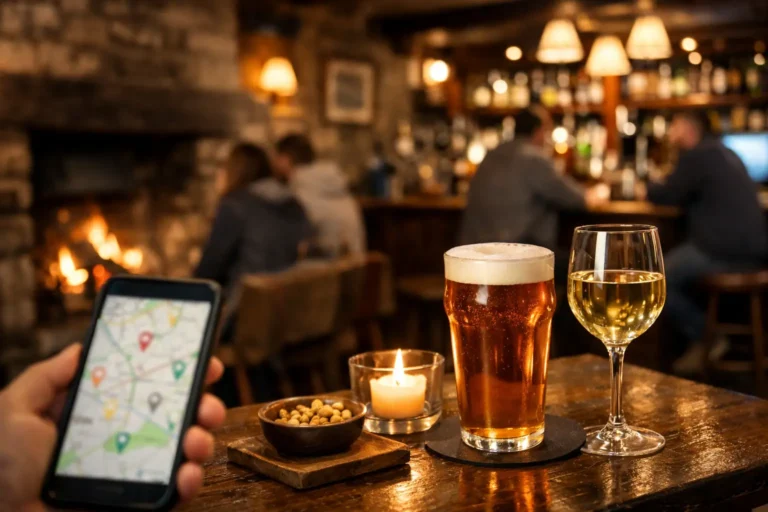
Even a carefully researched route benefits from a live map. Pubs can be unexpectedly busy, weather can change, and sometimes a brilliant-looking place appears two streets away. The Pubs Near Me: Pub Finder UK Android app is useful here: you can find pubs nearby, save favourite pubs, build a pub crawl, track pubs visited and keep your own ratings and beer notes as you go.
Save the planned stops before setting out, then add one or two nearby backups. That keeps the route organised without turning it into a rigid itinerary. For ale enthusiasts, noting what you tried can also stop the familiar end-of-day question: “What was that excellent pale ale at the second pub?”
Let the place shape the day
A route through a historic market town may work best as a gentle loop with time for a riverside stop. In a big city, it can be smarter to pick one district and explore it properly rather than chase famous names across several miles. On a sunny day, a beer garden may deserve longer than planned; in January, a fire, a roast and a cosy snug might be the real destination.
The useful thing about planning is not that it removes spontaneity. It gives spontaneity somewhere sensible to happen. Pick a strong first pub, a realistic direction of travel and a safe finish, then leave enough room for the group to follow the best pint, the warmest welcome or the hidden gem that makes the day.