If you ask ten regulars to name the biggest pub in the UK, you will probably get three different answers and a spirited debate before the first round is finished. That is because “biggest” sounds simple, but in pub terms it rarely is. Are we talking floor space, capacity, number of bars, beer garden size, or the sheer scale of the building attached to the pub?
For pub-goers, that matters more than it might seem. The place marketed as the biggest is not always the one that feels most impressive when you walk in, and the largest venue by square footage may not be the best shout for atmosphere, beer choice or a proper day out. So rather than pretend there is one neat answer, it is more useful to look at how the claim works, which pubs are usually part of the conversation, and what you should expect if you are planning a visit.
What does “biggest pub in the UK” actually mean?
When people search for the biggest pub in the UK, they usually mean one of two things. Either they want the single largest pub building in Britain, or they want the biggest pub experience – a huge, memorable venue that feels grander than the average local.
Those are not always the same thing. Some enormous venues have a pub at their heart but also operate as restaurants, event spaces or hotel complexes. Others are plainly pubs, but their claim depends on whether you count outdoor areas, multiple floors or adjoining rooms. That is why pub size records tend to be a bit slippery.
The most sensible way to judge it is by function as much as footprint. If a place is widely used and recognised as a pub, with bars, beer service and a proper pub-going identity, it belongs in the discussion. If it is really more of a leisure complex with a bar attached, that is a different category.
The pub most often named as the biggest in the UK
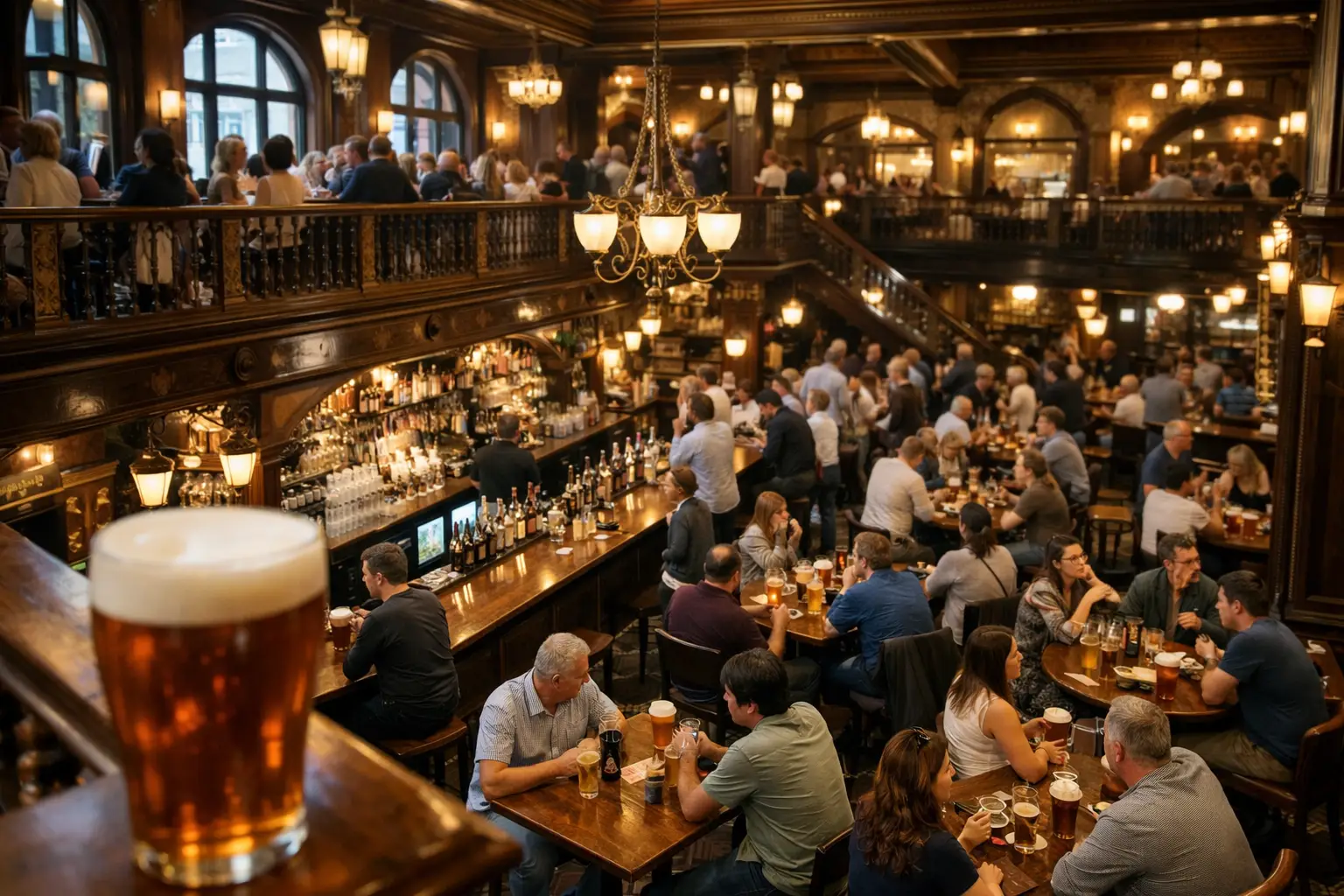
One name that often comes up is The Moon Under Water in Manchester. It is frequently mentioned in “largest pub” conversations because it is vast by city-centre standards, with a huge open-plan layout, high customer capacity and the kind of footprint that can swallow up crowds without feeling full too quickly.
If you have been, you will know why it gets talked about. It is not just large on paper. It feels large in the lived-in pub sense – long bars, broad seating areas, constant footfall, and enough room for very different groups to occupy the space at once. Office workers, football fans, students and weekend visitors can all be in there without the place losing its rhythm.
That said, calling it the undisputed biggest pub in the UK is still tricky. Claims about exact square footage are not always consistently sourced, and other venues around the country also make large-pub claims depending on what is being measured.
Other pubs that get mentioned in the debate
The George Inn at Clifton, near Penrith, is another venue regularly linked with “largest pub” discussions, particularly because of the overall scale of the building. It is the sort of place that reminds you how elastic the word pub can be in Britain. A rural inn can be enormous, sprawling across multiple rooms and serving food, drink and accommodation, while still feeling more traditional than a giant city drinking hall.
You also get big destination pubs in tourist-heavy areas and historic coaching inns that are physically huge but not always famous enough to dominate online search results. This is where pub folklore and search intent part company a bit. The internet tends to favour the venue with the strongest repeat claim, while seasoned pub visitors know there are several contenders depending on region and style.
So if you are looking for a tidy pub-trivia answer, The Moon Under Water is one of the safest names to know. If you want the full truth, it is better to say there are a few contenders and the title depends on how you define size.
Why the biggest pub is not always the best pub
A huge pub can be brilliant, but it can also be a bit anonymous. Space is useful if you want an easy meet-up point, a reliable seat in a busy city, or somewhere to watch sport without standing shoulder to shoulder. Big pubs are often practical in ways tiny heritage boozers simply cannot be.
But there is a trade-off. The more a venue expands, the harder it can be to keep that close-knit pub feel. Character does not come automatically with square footage. Some large pubs manage warmth surprisingly well, using different zones, better lighting and a varied drinks offer to stop the place feeling like a hall with a bar in it. Others feel functional rather than memorable.
That is why the biggest pub in the UK is a fun search, but not always the right planning tool on its own. If your priority is cask ale, heritage, food, live sport or a cracking beer garden, size should probably be only one part of the decision.
What to expect from a genuinely massive pub
The upside of a very large pub is convenience. These places are usually easy for groups, handy for spontaneous meet-ups and far less stressful on a Friday or Saturday than squeezing into a tiny room with nowhere to perch your pint.
They often work well for visitors too. If you are in an unfamiliar city, a large pub is an easy anchor point while you get your bearings. Big central venues tend to sit near stations, shopping areas or nightlife routes, which makes them practical as a first stop or meeting place before moving on to more characterful pubs nearby.
The downside is that service and atmosphere can vary wildly depending on timing. A giant pub at midday can feel airy and relaxed. The same pub on a match day or late Saturday can feel hectic, loud and less personal. Neither version is wrong – it just depends what sort of outing you want.
Biggest pub in the UK versus biggest beer garden
This is where plenty of searches get muddled. Some people are really after the biggest pub in the UK, while others want a pub with the biggest beer garden or the largest outdoor drinking space. Those are very different things.
A pub with a vast beer garden can feel bigger in summer than a massive indoor venue in winter. If your ideal day is a sunny pint with loads of outdoor seating, chasing the “biggest pub” label may not actually lead you to the best place. It is often better to search by occasion – beer garden, riverside setting, sport, food or old-school pub character.
That is also how most pub trips work in real life. Few people travel purely for floor area. They travel because a place looks fun, useful or a bit special.
How to plan a visit if you want a big-pub day out
If you are making a trip to see one of the pubs often called the biggest in the UK, it is worth treating it as part of a wider pub crawl rather than the whole event. Large pubs are excellent anchors, but they are rarely the only stop you will remember.
Start by checking what else is nearby. In city centres especially, the biggest pub is often surrounded by better specialist options for cask ale, craft beer, quieter conversation or traditional interiors. One sensible approach is to begin in the big venue, get the group together, then branch out into smaller pubs with more distinct character.
If you like planning ahead, using a pub finder app can make that far easier. Being able to spot pubs near you, save favourite pubs and map out a loose route is genuinely useful, especially in big cities where one oversized venue can dominate the area but not necessarily offer everything you want. For anyone building a proper day out, the route matters more than the headline claim.
Is the biggest pub in the UK worth visiting?
Usually, yes – if you go in with the right expectations. The biggest pub in the UK is worth seeing for the novelty alone, and there is something undeniably entertaining about standing in a pub that feels more like a small terminal than a snug corner boozer.
But the smarter reason to visit is context. Big pubs tell you something about British drinking culture: our appetite for social spaces, the mix of old pub traditions with modern high-capacity venues, and the fact that one country can comfortably support both tiny centuries-old inns and sprawling city-centre bars.
That contrast is part of the fun. You can have a pint in a venue famous for its scale, then finish the evening in a compact local where everyone seems to know each other. Both count as proper pub experiences. One just takes a few more steps to reach the bar.
If you are set on ticking off the biggest pub in the UK, treat the title as a starting point rather than the final word. Go for the scale, stay curious about the surrounding pubs, and you will usually end up with a much better day than chasing a record alone.