You have just stepped off a busy high street, the rain is starting, and a pub with a giant sign promising ‘Traditional British Food’ looks like an easy answer. Sometimes it is. Other times, it is the sort of place where a forgettable pint costs a small fortune, the menu could be anywhere in the country, and nobody behind the bar has time for a word beyond “next please”. Knowing how to spot tourist trap pubs can save a city break, and steer you towards the places with proper warmth, decent beer and a bit of local character.
A tourist-focused pub is not automatically a bad pub. Historic areas naturally attract visitors, and plenty of excellent pubs sit a stone’s throw from famous landmarks. The aim is not to avoid busy places or visitors. It is to tell the difference between a pub that happens to welcome tourists and one that relies on them never coming back.
How to spot a tourist trap pub before you go in
Start with the area, but do not judge it alone. Pubs beside stations, theatres, waterfronts and major attractions often pay higher rents, so prices may be a little higher. That is understandable. The warning sign is when the whole offer feels designed for passing trade, with little reason for a local to return.
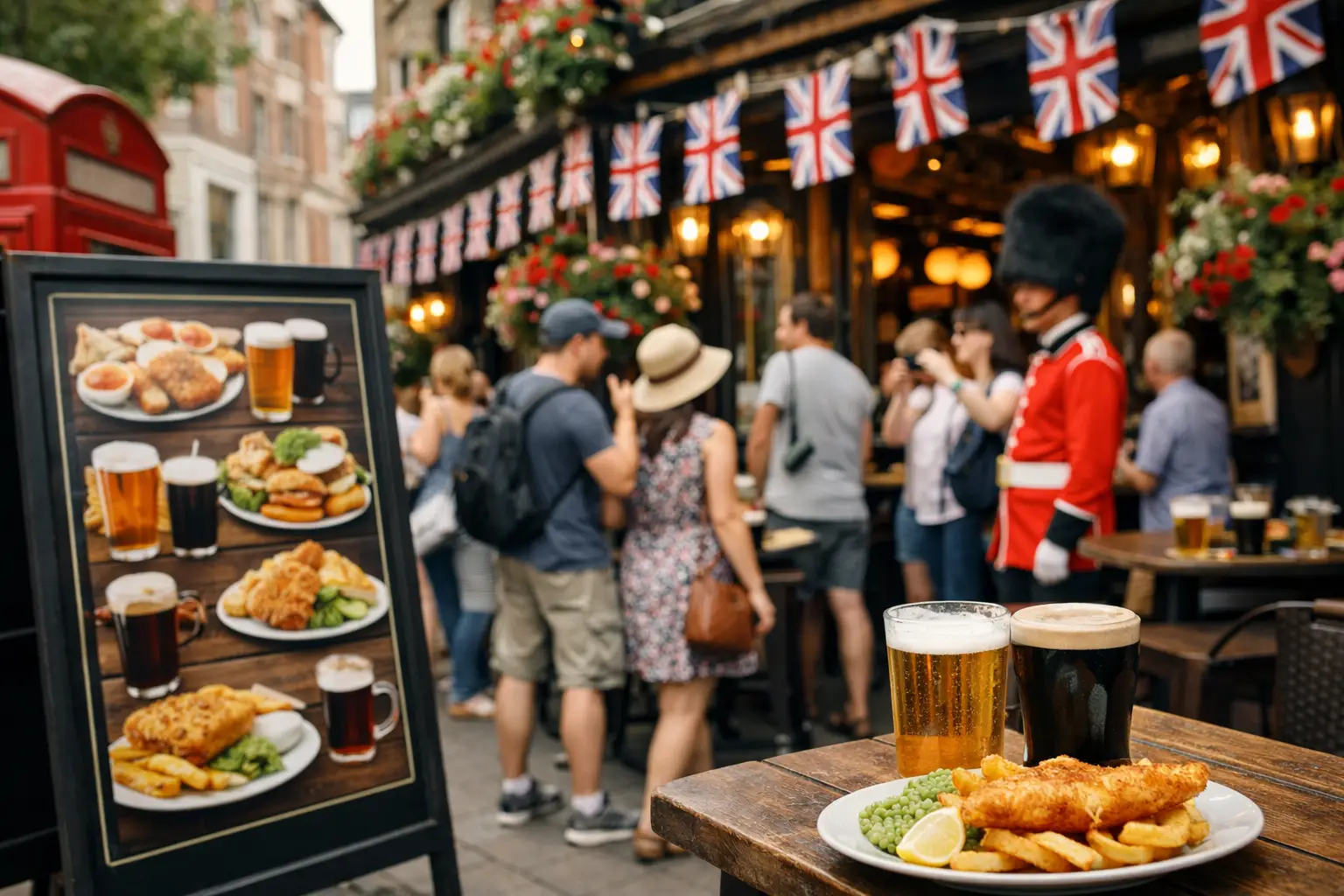
Look at the board outside. A concise food offering, a clear drinks list and a well-kept chalkboard can be encouraging. A vast laminated menu featuring every British cliché – all-day breakfasts, curry, burgers, pizza, fish and chips, Sunday roast and afternoon tea – is worth treating cautiously. A pub kitchen can do several things well, but trying to serve everything from dawn to late evening often means convenience has won over care.
The same goes for signs shouting about ‘the cheapest pints’, huge cocktail deals or a relentlessly cheerful hard sell. Good-value pubs exist everywhere, of course, but the best ones usually let the atmosphere, service and drinks do more of the talking.
Check whether the beer list makes sense
You do not need to be a cask ale expert to read a bar. If a pub claims to champion local beer, see whether it actually stocks some. A couple of regional ales, rotating guest lines, or staff who can tell you what is pouring well that day are all promising signs.
At a tourist trap, the handpulls may be decorative, the selection may be identical to every nearby venue, or nobody can say how long a cask has been on. This is not a rule that excludes modern pubs, either. A well-run craft beer bar may have no cask at all but still offer a thoughtful, fresh range with knowledgeable service.
If you are planning a weekend of pub stops, Pubs Near Me: Pub Finder UK is handy for seeing what is nearby, saving favourites and checking community ratings rather than choosing solely from the first pub outside an attraction.
Read the room, not just the reviews
Online reviews are useful, but they need a little interpretation. A pub with thousands of glowing comments may simply be very visible. Read the recent feedback and look for specifics: people mentioning the quality of a particular ale, friendly staff, a good quiz night, a proper fire, or a well-managed match-day crowd. Those details tend to come from real experiences.
Be wary of reviews that only repeat phrases such as “great location” or “nice place after sightseeing”. They are not necessarily negative, but they tell you little about the actual pub. Photos can help too. Look beyond the posed food shots and see whether the bar looks lived-in, whether drinks appear well kept, and whether the place has its own identity.
Inside, the best clue is often who is using the pub. A mix of regulars, workers, neighbours and visitors is generally a healthy sign. You may notice people greeting the bar staff, popping in with a dog after a walk, or settling in for one pint and a chat. That does not mean a quiet room full of tourists is doomed, particularly midweek or in a city centre. It simply suggests the pub may be trading more on its location than its character.
Prices matter, but context matters more
An expensive pint does not prove a pub is a tourist trap. Central London, Edinburgh’s Old Town and popular coastal spots all come with higher costs. What matters is whether the price feels matched by the experience.
Ask yourself a few simple questions. Is the beer in good condition? Is the glass clean? Is the service welcoming and reasonably quick? Does the food look as though it has been prepared with some care? A higher bill is easier to accept in a handsome historic pub with excellent cask ale, good staff and a memorable setting.
The concern is the combination of premium prices and low effort: tired décor pretending to be heritage, generic food, poor beer care and staff who appear overwhelmed or disengaged. A pub does not have to be polished to be good. In fact, a slightly scruffy local with a cracking pint and an honest welcome can be far more rewarding than a glossy venue built around souvenir-shop footfall.
Beware of fake history and borrowed character
Britain has no shortage of genuinely old pubs, from timber-framed coaching inns to Victorian gin palaces. Authentic history is often visible in the building itself, but it does not need constant announcing. A pub with centuries of stories may have a modest plaque, old photographs, a local CAMRA certificate, or staff happy to share what they know.
A less convincing place tends to lean heavily on vague claims: “ye olde” branding, random flags, artificial beams, themed wall art and a story that is never quite explained. None of these details proves anything by itself. Some newer pubs are brilliantly designed, while some ancient ones have been refurbished beyond recognition. Still, when every surface is selling an idea of Britain rather than offering a comfortable pub, trust your instincts.
Find a better pub two streets away
The simplest way to avoid the obvious tourist trap is to walk for five more minutes. Move away from the main attraction, station entrance or busiest shopping street and the choices often improve quickly. Side streets, residential edges of city centres, market areas and roads near independent shops can reveal pubs with more personality and fairer prices.
This approach works particularly well when planning a pub crawl. Pick one landmark pub if it genuinely appeals, then build the rest of the route around places with different strengths: perhaps a historic boozer, a cask-led local, a good beer garden or a relaxed food pub. It makes for a better afternoon than trying to force every stop into the same crowded square.
Local knowledge is valuable here. Ask a hotel receptionist, shop owner or taxi driver where they would take a friend for one good pint, but keep the question specific. “Where is a decent traditional pub nearby?” is more likely to get a useful answer than “Where is the best pub?” You can also ask bar staff at a pub you already like where they go after work. Most will have an opinion.
Give pubs a fair chance
Not every imperfect visit is evidence of a tourist trap. A popular pub may be short-staffed before a concert, a cask can occasionally be off, and a busy Saturday can make even a brilliant venue feel rushed. If the staff handle problems well, replace a poor pint without fuss, or explain a delay honestly, that is a positive sign.
Likewise, chain pubs are not automatically poor choices. Some are reliably well-run, accessible and useful for groups, especially when you need food, sport on the screens or a predictable meeting point. The goal is not pub snobbery. It is choosing somewhere that delivers what it promises, at a price that feels fair.
A memorable UK pub is rarely defined by age, décor or postcode alone. It is the small things: a well-kept pint, a room that feels comfortable, staff who know their stock, and the sense that people come back because they want to. Leave space in your plans for that pub just off the main drag – it may be the place you talk about long after the landmark has faded from view.