You have probably seen both versions of the British pub experience – a snoozing spaniel under a table by the fire, and a firm “no dogs except assistance dogs” sign on the door. So, are dogs allowed in pubs? Sometimes, yes. Sometimes, no. It depends on the pub, the part of the pub, and how the venue handles food, space and house rules.
That uncertainty catches plenty of people out, especially if you are planning a walk, a weekend away or just fancy a pint without leaving the dog at home. The good news is that dog-friendly pubs are common across the UK, particularly in countryside locations, market towns and neighbourhood locals that lean into a relaxed community feel. The less helpful news is that there is no one-size-fits-all rule covering every pub.
Are dogs allowed in pubs by law?
In the UK, there is no blanket law that says all pubs must allow dogs, and no blanket law that says all pubs must ban them either. In most cases, it is down to the individual pub’s policy.
That policy is often shaped by practical things rather than principle. A small city-centre pub with cramped seating and a busy food service may decide dogs are more trouble than they are worth. A large country pub with a beer garden, tiled floors and a steady stream of walkers may actively welcome them with water bowls and biscuits behind the bar.
Where people sometimes get confused is food. Plenty of pub-goers assume dogs are not allowed anywhere food is served, but that is not automatically true. A pub can allow dogs in certain areas while serving food, provided it manages hygiene properly and follows the relevant guidance. Many pubs solve this by allowing dogs in the bar area and outside, but not in the main dining room.
Assistance dogs are different. Under equality law, pubs are expected to allow assistance dogs to accompany disabled people, even where pet dogs are not normally permitted. That is not a goodwill extra. It is a legal and access issue.
Why some pubs welcome dogs and others do not
If you have ever wondered why one pub is proudly dog friendly and the next one along is not, it usually comes down to layout, clientele and staffing.
A pub with lots of outdoor space can accommodate dogs far more easily than one with narrow walkways and tables packed closely together. The same goes for pubs that attract walkers, cyclists and day trippers. In those places, dogs are often part of the trade. They are not an awkward exception. They are expected.
By contrast, pubs focused on formal dining, late-night drinking or match-day crowds may be less keen. That does not make them unfriendly. It just means they are making a practical decision. A lively sports pub with standing room only on a Saturday afternoon is not always the right place for a nervous terrier.
There is also the question of staff capacity. Welcoming dogs sounds simple, but it adds jobs. Water bowls need topping up. Accidents need cleaning. Staff may have to step in if one dog barks at another or blocks a walkway. Some pubs are happy to do that. Others would rather keep things straightforward.
How to tell if a pub is dog friendly
The easiest answer is still the most reliable one – check before you go.
A lot of pubs make their dog policy clear on the door, on social pages or within their listing information, but not all of them keep it updated. Policies can also change by season, time of day or area of the venue. A pub might allow dogs in the garden all year, in the bar during quieter hours, and nowhere inside on Sunday lunch service.
That is why it helps to look for more than a simple yes or no. What you really want to know is where dogs are allowed, whether food is served in that area, and whether there are any conditions such as keeping dogs on leads.
If you are planning an afternoon out, it is worth checking reviews as well as official info. Regular pub-goers tend to mention whether a place genuinely welcomes dogs or merely tolerates them. There is a difference. A truly dog-friendly pub usually shows it in small ways – water bowls, easy seating, tolerant staff and enough room that nobody feels in the way.
If you use a pub finder app to check pubs near you, saving a few likely options before heading out can save a lot of wandering about with an impatient dog and a lukewarm packet of treats in your pocket.
Are dogs allowed in pubs that serve food?
Yes, they can be – but usually with limits.
This is one of the biggest myths around UK pubs. Serving food does not automatically rule dogs out. What matters is how the pub manages cleanliness and separates spaces where needed. Many pubs deal with this sensibly by allowing dogs in the public bar, the beer garden or a specific section, while keeping the main restaurant area dog free.
From a customer point of view, that middle ground often works well. Dog owners get somewhere welcoming to stop for a pint or lunch, and diners who would rather eat without dogs nearby still have their own space.
That said, do not assume every food-led pub will offer that balance. Gastropubs in particular can be stricter, especially in smaller buildings where there is no clear split between drinking and dining areas. If food is the main reason you are visiting, it is worth checking not only whether dogs are allowed, but whether they are allowed where you will actually be sitting.
Good dog manners still matter
Even in the most dog-friendly pub in Britain, a badly behaved dog can test everyone’s patience.
Most pubs that welcome dogs expect the basics. Keep your dog on a lead unless the venue clearly says otherwise. Make sure it stays close to your table rather than sprawled across a busy walkway. Bring water if you are not sure bowls will be available. And if your dog is likely to bark at strangers, beg from nearby tables or get anxious around other dogs, a packed pub may not be the best setting.
This is where “dog friendly” can mean different things. Some pubs are ideal for calm dogs that settle under a table while their owners have a quiet drink. Others are set up for more active post-walk visits, with outdoor seating and plenty of coming and going. Knowing which kind of pub you are choosing makes a big difference.
It is also worth being realistic about timing. A cosy local at 3pm on a weekday is a very different environment from the same pub at 8pm on a Friday. If your dog is new to pubs, start with an easier setting and work up from there.
What makes a pub genuinely dog friendly?
A sign on the door helps, but it is not the full story.
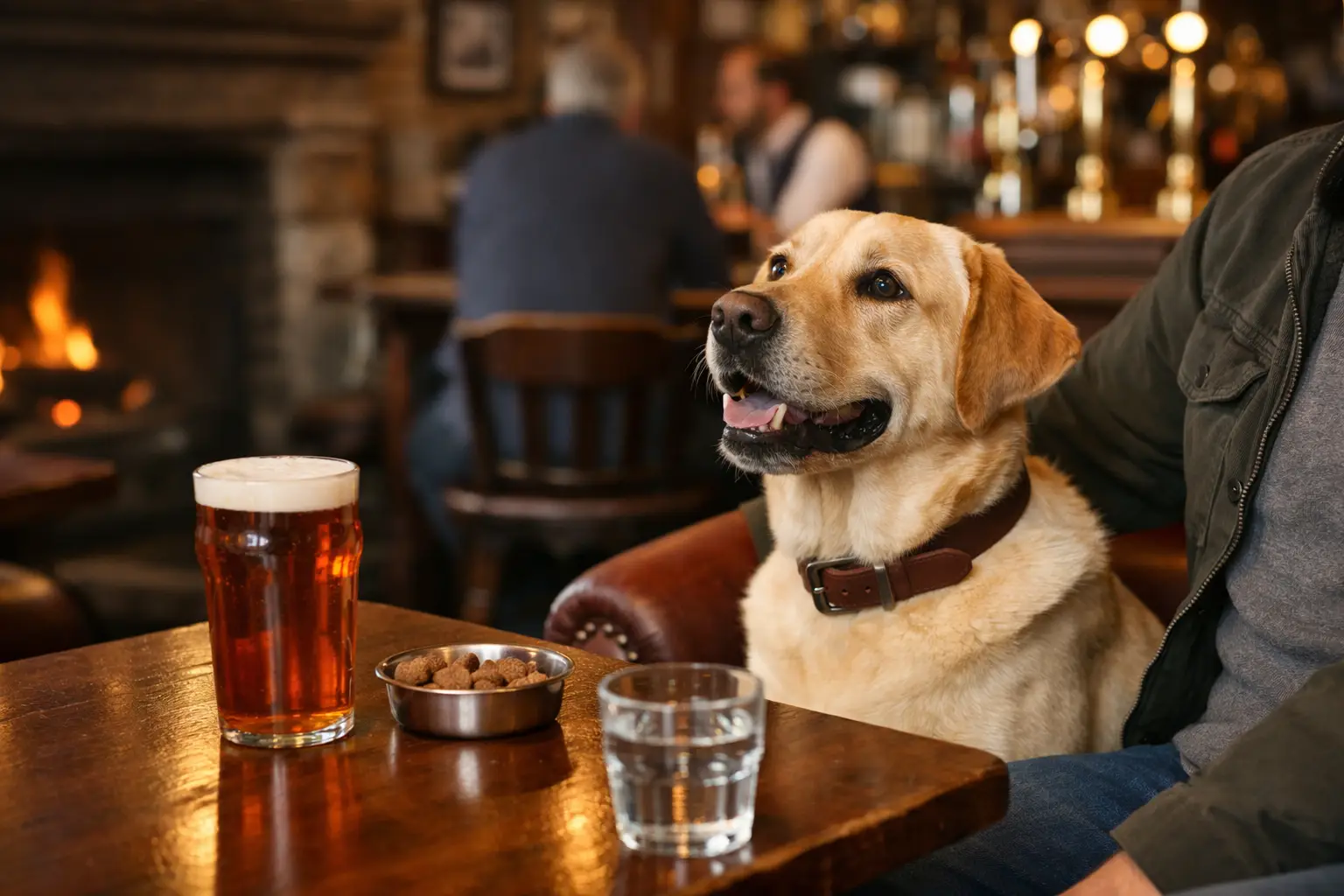
The best dog-friendly pubs tend to get the practical bits right. There is space between tables, a bit of tolerance for muddy paws, and staff who do not look alarmed when a Labrador appears at the bar. Beer gardens help, especially in warmer months, and hard floors are often easier than wall-to-wall carpet for obvious reasons.
Some pubs go further with water stations, treats, dog menus or little extras near the entrance. That can be charming, but it is not essential. What really matters is whether the pub works for both dog owners and everyone else. A place can welcome dogs warmly while still keeping things clean, calm and comfortable.
That balance is usually the sign of a well-run pub rather than a gimmicky one.
When it is better to leave the dog at home
There are times when bringing a dog to the pub is more hassle than pleasure.
If you are heading into a crowded city pub, planning a long meal in a formal dining room or joining a busy evening group, your dog may not enjoy it much. The same goes for very hot days, noisy events or pub crawls where you will be moving from venue to venue. One relaxed pint in a garden is one thing. A four-stop Saturday session is another.
It also depends on the dog. Some are born pub companions and can sleep through anything short of a dropped plate. Others are happier at home. Being honest about that tends to make for a better outing all round.
If you like finding dog-friendly options while travelling, keeping a shortlist of reliable pubs can make life easier. Tools that let you save favourite pubs and note which ones were good for dogs are especially handy when you are exploring somewhere new.
The short answer
So, are dogs allowed in pubs? Often yes, but only where the pub chooses to allow them, and usually with a few conditions.
The safest approach is to treat dog access as a venue-by-venue decision rather than a national rule. Check ahead, look for pubs that suit your dog as well as your plans, and remember that the best dog-friendly pub is not always the nearest one. Sometimes it is the one with enough room, the right atmosphere and a landlord who knows exactly where to put the water bowl.
If you get that bit right, taking the dog to the pub can be one of the better small pleasures of a British afternoon.