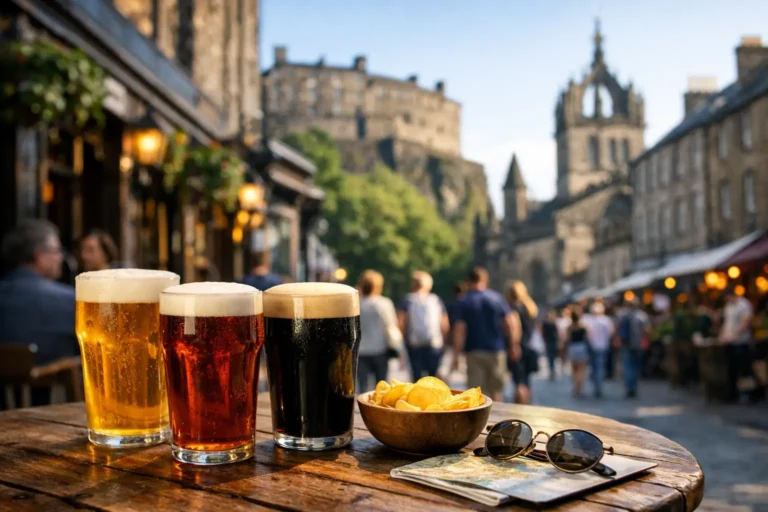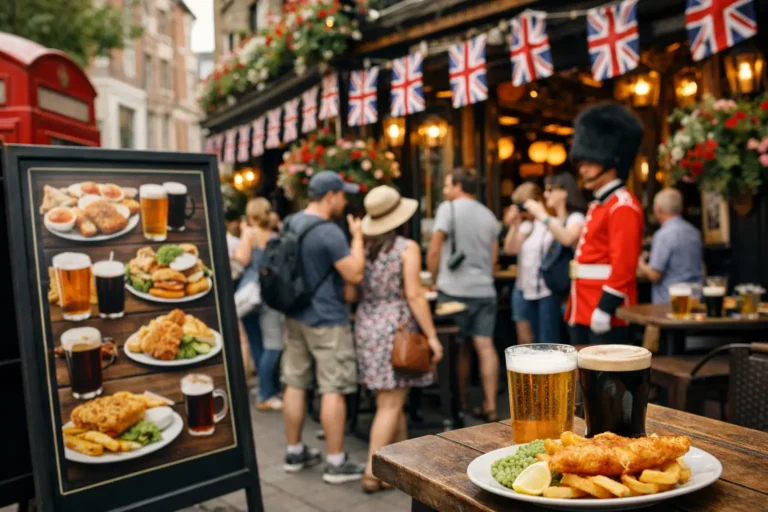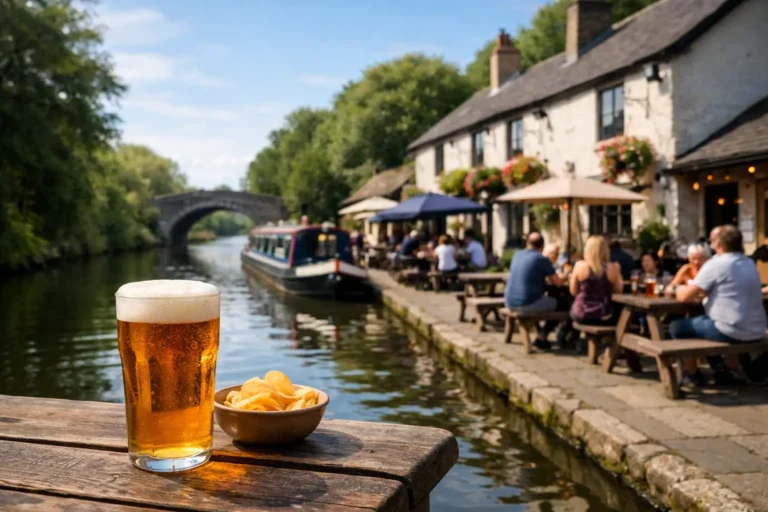
A great pub crawl is not about racing from one bar to the next. It is a chance to see a town or city through its best locals, historic boozers, taprooms and tucked-away ale houses – with enough time at each stop to enjoy the place properly. Done well, it can turn an ordinary Saturday into a memorable little tour of British pub culture.
What is a pub crawl?
A pub crawl is a social outing where a group visits several pubs in one area, usually on foot, having a drink, food or soft drink at each stop. The route might follow a theme – historic pubs, cask ale, beer gardens or live sport – or simply connect a few venues that suit the group.
The word ‘crawl’ can sound as though the aim is to drink as much as possible. It does not have to mean that at all. The best crawls are paced, sociable and built around good pubs rather than quantity. A half-pint of local bitter, a low-alcohol beer, a soft drink or a packet of crisps all count as taking part. What matters is sharing the route and enjoying the character of each venue.
In Britain, pub crawls range from a relaxed afternoon around a market town to a full evening exploring different neighbourhoods in cities such as Manchester, Leeds, Bristol or Edinburgh. Some are planned for birthdays, reunions and stag or hen weekends. Others are simply a good excuse to try the pubs near you that have been on your list for ages.
What makes a good pub crawl?
A good route has variety without becoming a logistical puzzle. You might begin in a traditional pub with cask-conditioned ale and an open fire, move on to a lively craft beer spot, then finish somewhere with food, music or a beer garden. Each stop should offer a slightly different reason to stay for a while.
Distance matters more than many people realise. Pubs that look close on a map can be separated by a steep hill, a confusing ring road or a twenty-minute walk through an area with little else going on. For most groups, four to six venues within a compact area is plenty. Three excellent pubs with time to talk can be far better than eight rushed stops.
It also helps to think about the atmosphere you want. A crawl for cask ale enthusiasts will look different from a match-day route, a student night out or a Sunday afternoon with visiting friends. There is no single right format. The route should reflect the people going, their budget and how much walking everyone is happy with.
A route with a natural rhythm
Start somewhere easy to reach, particularly if people are arriving from different places. A pub near a station, bus stop or central meeting point takes the stress out of the first round. Choose a place where the group can settle in and agree the plan, rather than beginning with a packed venue where nobody can hear each other.
From there, keep the route moving in one direction where possible. Doubling back wastes time and can leave people feeling as though they are marching between pints. Finish near reliable late transport, taxi ranks or the place where the group is staying. It is a small bit of planning that makes a big difference at the end of the night.
Food is worth building in too. A proper meal midway through can slow the pace and keep the evening comfortable. If a sit-down dinner does not suit the plan, choose a stop with decent bar snacks, pies or sharing plates. Do not rely on finding food after every kitchen in town has closed.
How to plan a pub crawl without overdoing it
The simplest approach is to pick a small area and give the crawl a purpose. Perhaps you want to explore the best traditional pubs in a city centre, compare local pale ales, or show friends a few hidden gems around your neighbourhood. Once you have a theme, the choices become easier.
Check practical details before setting off. Opening hours, food service, booking policies and live events can all change the feel of a pub. A quiz night may be ideal for one group and too busy for another. Likewise, a tiny heritage pub can be a brilliant stop for two or three people but awkward for a group of fifteen arriving together.
Keep the plan flexible. One pub may be busier than expected, somebody may fancy staying for another round, or the weather may make a beer garden far too tempting to leave. Think of your route as a shortlist rather than a strict timetable. Having one or two backup pubs nearby is sensible, especially on Friday and Saturday evenings.
The Pubs Near Me: Pub Finder UK Android app can be useful here: you can find nearby pubs, save favourite pubs, build a crawl, track pubs visited and make notes on the beers you have tried. It is particularly handy when a promising-looking pub appears between planned stops or when the group wants to remember a venue for another visit.
Choosing the right number of stops
For an afternoon crawl, three or four pubs is usually enough. It leaves room for a slower pace, a meal and a proper look around each venue. An evening route may stretch to five or six, but only if they are close together and the group is comfortable with the pace.
More stops do not automatically make for a better outing. Every change of venue takes time: finishing drinks, paying, gathering coats, finding everyone outside and walking to the next place. Large groups should be especially realistic. If you are constantly checking where half the party has got to, the crawl stops being enjoyable.
A useful rule is to allow at least 45 minutes per pub, longer if you are eating. That gives people time to order without pressure, enjoy the atmosphere and decide whether the next stop still appeals. It also makes it easier to drink moderately and stay present for the conversation.
Pub crawl etiquette that keeps everyone welcome
Pubs are social spaces, but they are also workplaces and local gathering places. A friendly group that orders thoughtfully, keeps noise in check and treats staff with respect will be welcome almost anywhere. If a venue is quiet, take the cue from the room rather than trying to turn it into a nightclub.
Order at the bar when it is your turn, know what the group wants where possible, and do not block access once you have your drinks. In busy pubs, split larger groups into smaller orders rather than sending one person up with a complicated list for twelve people. If you have booked a table or area, arrive when you said you would.
Not everyone drinks alcohol, and no one should feel pushed to keep pace. Make room for soft drinks, alcohol-free options and anyone who wants to skip a stop or head home early. A good pub crawl looks after the group, not just the loudest person in it.
It is also worth appointing one person to keep an eye on the practical bits: mobile phones, bags, coats and the route home. Encourage water between drinks, eat properly and use public transport or a licensed taxi rather than driving. The aim is a good story the next day, not a difficult journey home.
Ideas for a more memorable crawl
Themes give a pub crawl a bit of shape without making it feel forced. A heritage route can take in Victorian gin palaces, old coaching inns and pubs with a story behind the bar. An ale trail might focus on independent breweries, changing guest pumps and good cellar standards. In warmer months, a beer garden crawl can work brilliantly, although it needs a weather-proof backup plan.
You could also give each stop a simple role: first pint, best building, best snack, best local beer and final food stop. It encourages everyone to notice more than the price of the next round. If you are visiting a new city, ask locals or read honest pub reviews before you go. The places with the most character are not always the ones on the busiest street.
For groups of friends, a small scorecard can be fun if it stays light-hearted. Rate the welcome, atmosphere, beer choice and whether you would return. Avoid treating staff or other customers as part of the entertainment. The point is to celebrate the pubs, not to make a performance of visiting them.
A pub crawl works best when it feels less like a challenge and more like a moving evening among good places and good company. Pick pubs you are genuinely pleased to visit, leave room for the unexpected, and take the time to enjoy the pint, the building and the conversation at every stop.