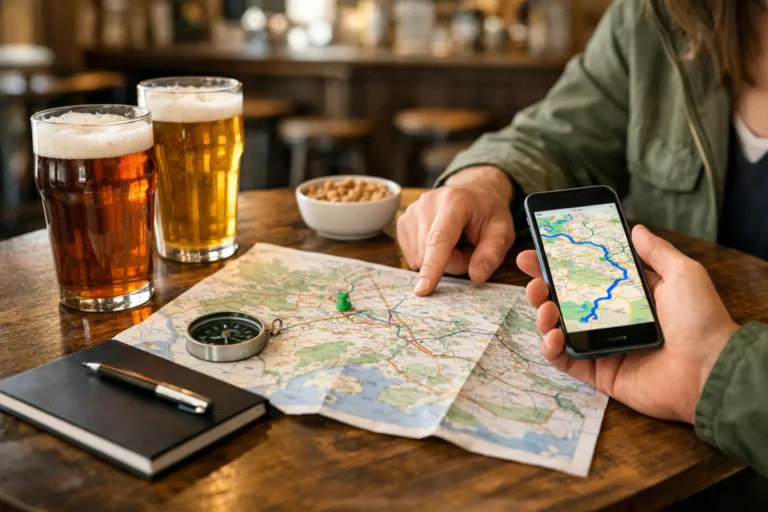
A proper crawl is a route, not a drinking target. Choose three or four core stops in one compact area, add one nearby backup, and check each pub’s current opening, food, booking and accessibility information. Use the CAMRA pub search for discovery, then confirm essentials with the venue itself.
Agree a finish time and check the journey home in the National Rail planner on the day. Water, food and alcohol-free drinks belong in the plan, and nobody should be pressured to match another person’s pace. The NHS explains alcohol units and its lower-risk guidance.
A good pub crawl is rarely about squeezing in the highest number of stops. The best pub crawls have a bit of shape to them – a smart route, a mix of atmospheres, and enough thought behind them that the whole thing feels easy rather than chaotic by 8pm. Whether you’re sorting a birthday, showing mates around a city, or just trying to do a Saturday properly, a little planning goes a long way.
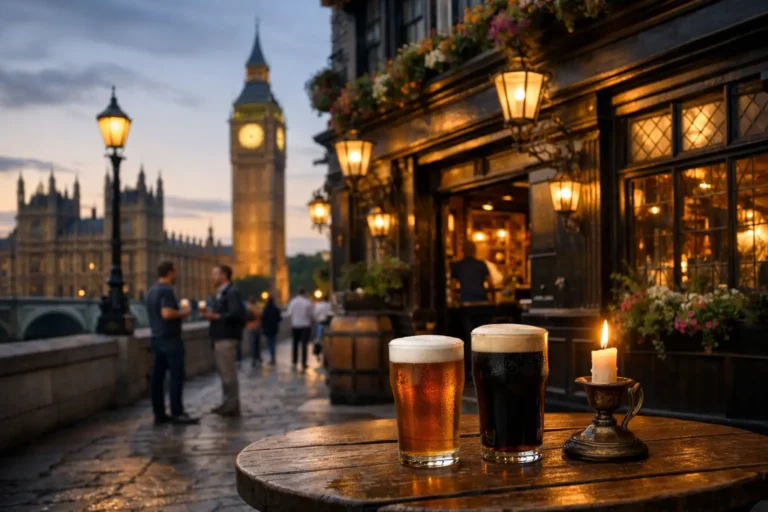
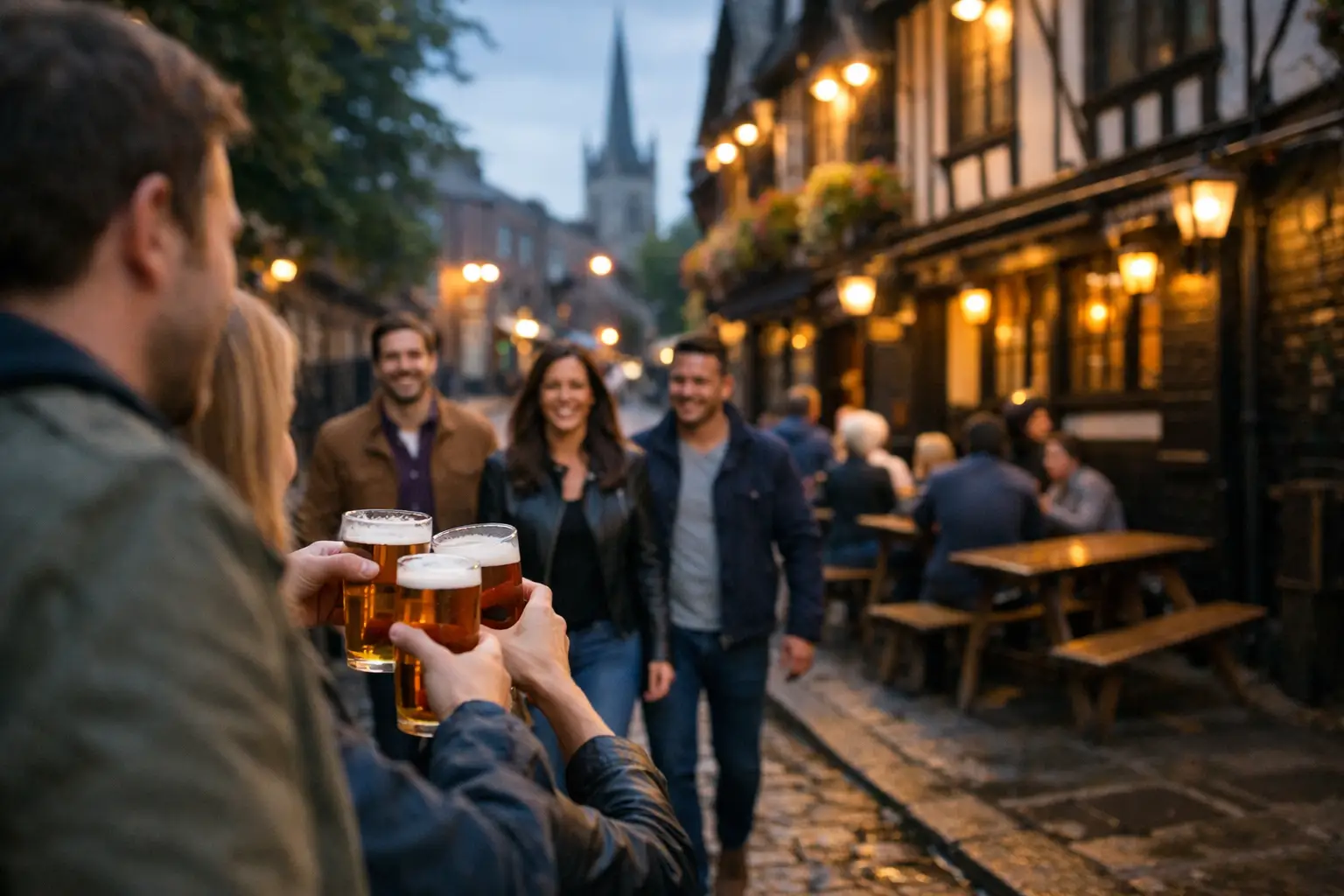
In the UK, pub crawls work best when they feel rooted in the place you’re in. That might mean historic pubs in an old city centre, a run of proper cask ale spots, a canalside stretch with good beer gardens, or a few lively locals near a station so nobody has to trek across town at the end of the night. The route matters just as much as the pubs themselves.
What makes pub crawls worth doing?
At their best, pub crawls are about discovery. You get to compare pints, atmospheres, music, service, interiors and crowd, all in a single outing. One pub might be all polished wood and handpulled bitter, the next a buzzy taproom, the next a tucked-away local with a fireplace and a brilliant pie menu.
That variety is the whole point. If you stay in one place all day, you’re committing to one mood. A crawl gives you options. It also helps when you’re with a mixed group. The lager drinker, the stout fan, the person who wants a decent wine, and the one who mainly cares about finding somewhere with seats can all get a turn.
There is a trade-off, though. Too many stops and the day becomes a blur. Too much walking and people lose interest. Too many obvious chain venues and it starts to feel less like a pub crawl and more like drifting between whichever places have room. A good crawl has momentum, but it also has judgement.
How to plan pub crawls that actually work
The easiest mistake is picking pubs first and thinking about geography later. Start the other way round. Choose an area you can comfortably cover on foot, then shortlist pubs within that patch. Most successful crawls stay fairly compact, especially if the group includes people arriving at different times or heading home by train.
Aim for four to six pubs for an afternoon or evening. That is usually enough to give the route character without turning the logistics into hard work. You can always leave room for a bonus stop if the group still has energy and the route is flowing well.
Think about sequence as well. Opening with a pub that is easy to reach and easy to order in makes life simpler. Somewhere spacious, friendly and not deafening is ideal while everyone arrives. Later on, you can move into more atmospheric or busier venues once the group is together.
It also helps to vary the pubs. If every stop is a sports pub with the same lagers on, the crawl can feel repetitive surprisingly quickly. Try mixing traditional pubs, ale houses, modern craft spots and one venue with standout food or outdoor space if the weather is playing nicely.
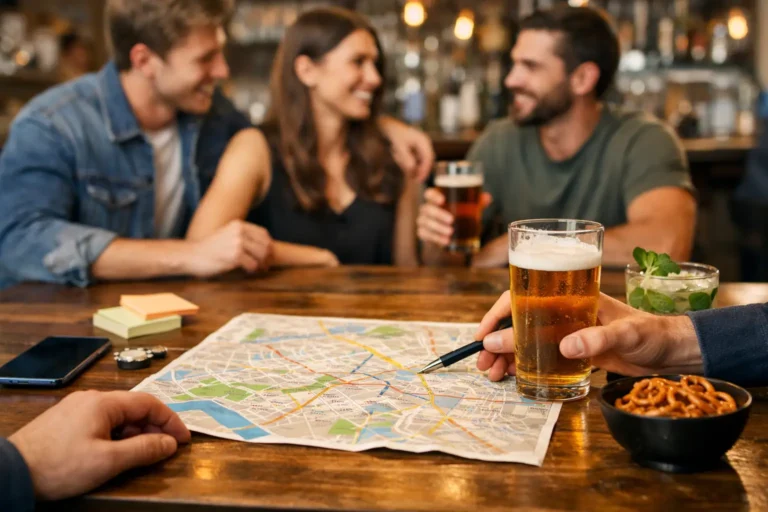
If you’re using a pub crawl planner, save the route in order and check walking times between each stop. This is one of those small bits of admin that saves a lot of faff on the day. Pub Reviews UK users often do this in the app to build routes, save favourite pubs and keep the whole crawl in one place rather than losing it in a group chat.
Choosing the right pubs for the route
Not every good pub belongs on a crawl. Some places are brilliant for a long, relaxed session but not ideal if you’re moving as a group. Others work well for a quick pint but don’t offer much if you’re delayed, waiting for mates or hoping to grab food.
A few things matter more than people think. Reliable service is one. If it takes 20 minutes to get served at every stop, the route drags. Layout matters too. Large groups do better in pubs with enough standing room, outdoor areas or multiple rooms rather than tiny bars where ten people block the entire counter.
You should also think about what the pub is known for. A real ale pub with well-kept cask can make a brilliant middle stop when people are settled and willing to slow down a touch. A lively late pub with music might suit the final leg. A beautiful historic pub can be worth slotting in early, before the busiest crowds roll in.
Food is another judgement call. A full sit-down meal in the middle can kill the pace unless that’s the plan from the start. But having one stop where people can grab chips, a toastie or something substantial often improves the whole day. It depends on the group and the occasion.
Pub crawls for different occasions
Not all pub crawls should be planned the same way. A birthday crawl is different from a Saturday ale trail, and both are different again from a casual city-break wander.
For birthdays and larger social groups, convenience tends to matter most. Stick to central areas, keep the walk short, and avoid overly niche venues unless the whole group is genuinely into them. For cask ale fans, the quality of the beer list matters more than the party atmosphere, so a slower route with fewer but better pubs is often the better call.
If you’re putting together a student-style crawl, budget becomes part of the planning. That does not mean choosing poor pubs. It means being realistic about price points, checking for deals, and making sure the route does not rely on expensive taxis between stops.
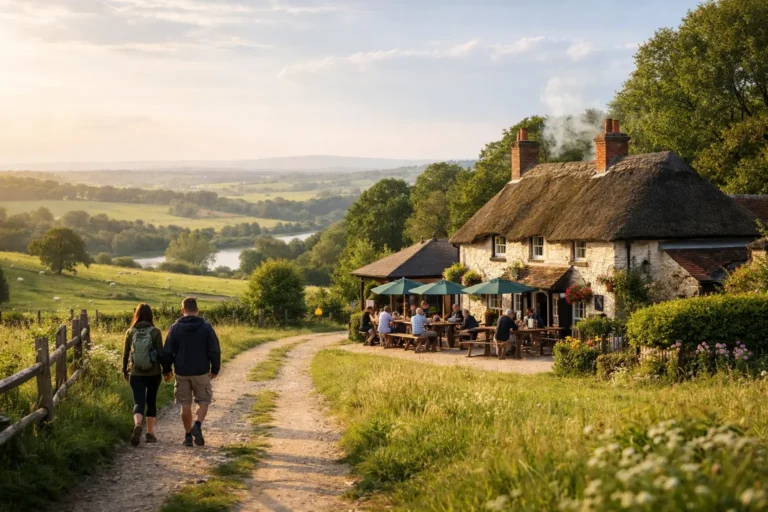
For couples or smaller groups, pub crawls can be more relaxed and more themed. Historic pubs, riverside pubs, dog-friendly pubs, beer garden crawls in summer, or winter routes built around fireplaces and dark ales all work well when there are only a few of you and no need to keep a larger crowd moving.
Pacing, etiquette and not ruining the day
The best crawl organisers are not the loudest ones. They are the ones who keep things easy. That means not overpacking the route, not insisting everybody drinks at the same speed, and not treating every stop like a race.
Water and food make a noticeable difference, as does leaving enough time in each pub to enjoy it properly. There is no glory in marching a group into a lovely old boozer only to leave ten minutes later because the route says so. If one pub has a great atmosphere, stay a bit longer and drop the weakest stop later on.
It is also worth remembering basic pub manners. Order efficiently. Do not swamp tiny bars with a complicated round if the pub is already busy. Respect booked areas and regulars. If a place clearly is not suited to large, lively groups, have one pint and move on rather than forcing it.
Responsible drinking is part of a good crawl, not a boring add-on. People enjoy the day more when they can remember where they went, what they drank and which pubs they actually loved. A measured pace nearly always leads to a better time than trying to turn every crawl into a challenge.
Why the route often matters more than the headline pub
People tend to obsess over the star pub. In reality, the gap between venues can make or break the day. A route with awkward hills, busy roads, long waits for taxis or constant doubling back quickly becomes a slog, however good the individual pubs may be.
A strong crawl has a natural rhythm. You finish one pint and the next pub is ten minutes away at most. There is something to look at on the walk. Maybe a market, a canal, a cathedral quarter, a high street full of older buildings, or a quieter backstreet stretch with hidden gems. The journey keeps the day moving without feeling like an endurance test.
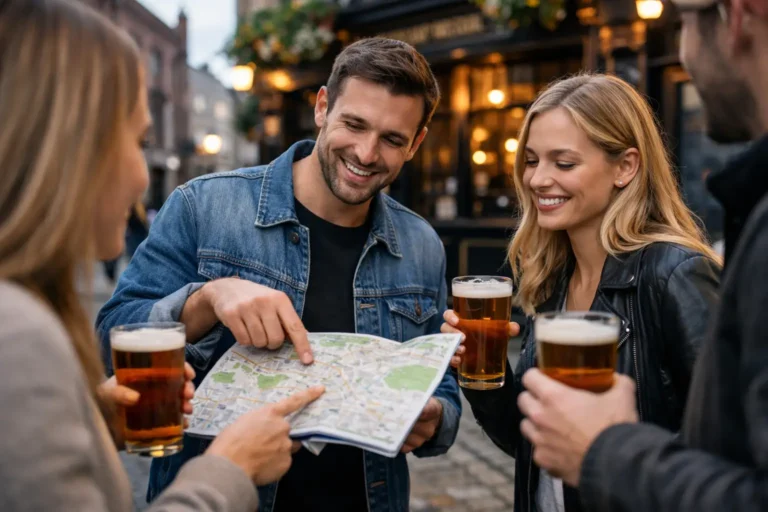
This is especially true if you’re exploring somewhere new. Visitors often get more from a pub crawl when it doubles as a way to get their bearings. You are not just hopping between drinking spots. You are seeing the city through its pubs, which is often the best way to understand its character.
Using tech without overcomplicating it
Nobody wants to stand on the pavement while one person squints at five different maps and an old screenshot of a pub list. A simple route saved in one place is enough. If you’re out exploring, using a pub finder app to check nearby options can help when a pub is unexpectedly shut, rammed, or just not right for the mood.
That flexibility matters. Even the best-planned pub crawls sometimes need adjusting. Maybe the beer garden is full, maybe the cask range is off, maybe the group decides they want food earlier than expected. The best planners leave room for that and keep a couple of nearby backup pubs in mind.
If you like keeping track of where you’ve been, it can also be handy to save favourite pubs and track pubs visited after the crawl. Over time, that makes it much easier to build better routes, spot patterns in what you actually enjoy, and avoid wasting a stop on somewhere that looked good once but never quite delivers.
The nicest thing about pub crawls is that they do not need to be complicated to be memorable. Pick a sensible area, choose pubs with a bit of character, leave space for the day to breathe, and pay attention to what the group actually wants. A well-planned crawl should feel less like a checklist and more like one good pub leading naturally to the next.