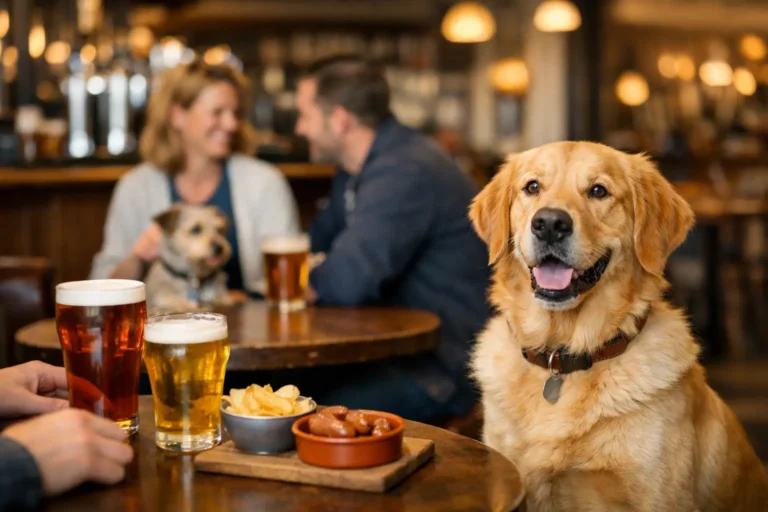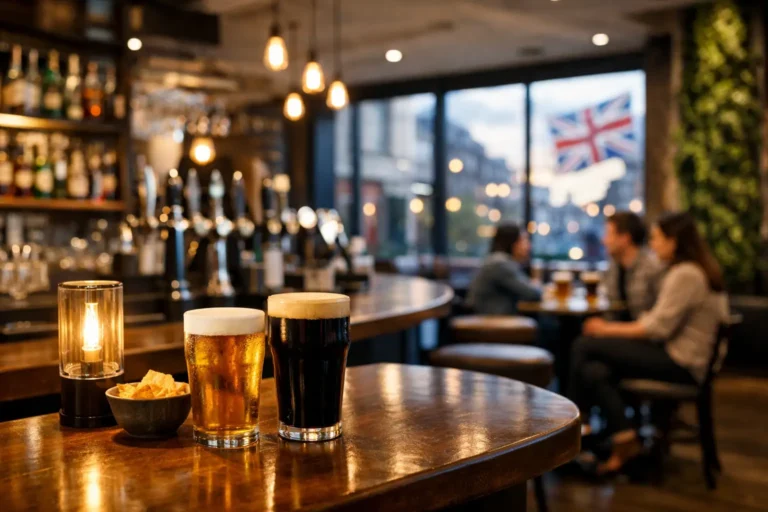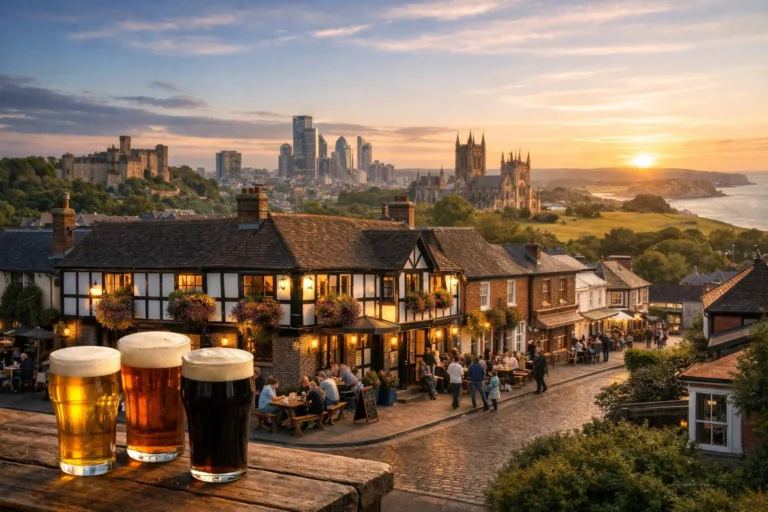
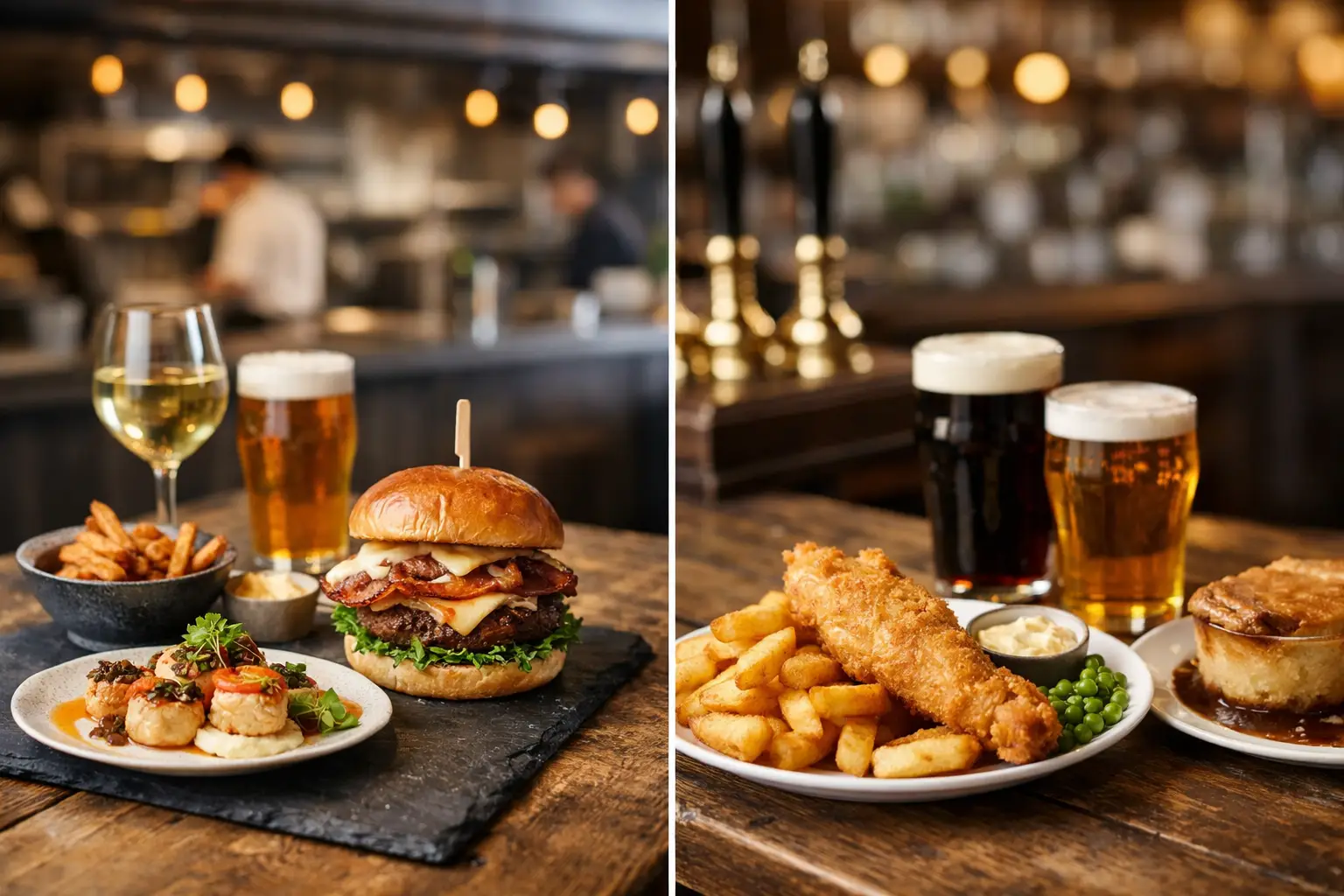
You can usually tell within about thirty seconds. If the first thing you notice is the smell of a Sunday roast, a chalkboard full of seasonal specials and tables laid out for lunch, you are probably in gastropub territory. If it is handpulls, a bit of lived-in charm, regulars at the bar and a packet of crisps doing honest support work beside your pint, you are likely in a more traditional pub. The gastropub vs traditional pub question matters because both can be brilliant, but they serve slightly different moods.
For plenty of pub-goers, this is not really a battle. It is more about choosing the right place for the right occasion. A gastropub can be ideal when food is the main event, while a traditional pub often wins when you want atmosphere, conversation and a proper pint without too much ceremony. Knowing the difference helps you avoid booking the wrong kind of place for your plans.
Gastropub vs traditional pub: the core difference
At the simplest level, a gastropub is a pub where food plays a starring role. Not just a token menu of pies and chips, but a kitchen-led offer that is meant to pull people in on its own terms. You will often see better ingredient sourcing, more ambitious menus, rotating specials and a stronger focus on presentation.
A traditional pub is usually built more around drink, atmosphere and community. That does not mean the food is poor, or even absent. Plenty of traditional pubs serve excellent lunches, Sunday roasts and classic pub grub. The difference is that the pub identity comes first. The food supports the visit rather than defining it.
In practice, the line can blur. Some village inns feel like old-school locals at the bar and polished gastropubs in the dining room. Some city pubs have upgraded the menu without losing their proper boozer feel. That is why labels only get you so far. What matters is how the place actually feels once you are through the door.
What makes a gastropub feel like a gastropub?
The biggest clue is intent. A gastropub usually wants to be somewhere you choose for dinner, not just somewhere you happen to eat in because you are already there. Menus are normally broader and more seasonal, and there is often more care around wine, cocktails and pairing drinks with dishes.
The setting tends to follow that lead. Tables may be more formal, lighting a touch softer and service a bit more restaurant-like. You are more likely to book ahead, especially at weekends. In many gastropubs, the kitchen shapes the rhythm of the room. Lunch and dinner sittings matter, and the busiest spots can feel more food-led than bar-led.
That said, a good gastropub still needs to feel like a pub. If the bar becomes an afterthought and the whole thing starts acting like a restaurant with beer taps, some of the charm goes missing. The best ones keep that relaxed pub ease while serving genuinely good food.
What defines a traditional pub?
A traditional pub usually puts comfort and character front and centre. It is the sort of place where the bar has real presence, where locals know the staff, and where the room works just as well for one pint as it does for a long afternoon. Beer matters more here, especially cask ale, though lager, cider and spirits all have their place.
There is often more visible history too, whether that means old timber beams, etched glass, a tiled floor, a snug in the corner or just that hard-to-fake sense that the pub has grown into itself over time. Even newer traditional-style pubs can capture that warmth if they get the balance right.
Food in a traditional pub can range from basic snacks to very strong classic cooking. The difference is style rather than quality. You are more likely to see staples done well than plates trying to impress for their own sake. Steak and ale pie, scampi, sausage and mash, a solid ploughman’s, that sort of thing. Familiar, satisfying and right for the setting.
Food, drink and price: where the trade-offs sit
If your main priority is food, gastropubs usually have the edge. You will often get more creative menus, better vegetarian options and stronger attention to ingredients. They can be excellent for date nights, birthdays and catch-ups where everybody wants a proper meal.
The trade-off is price. Gastropubs are often dearer, not just for mains but for starters, desserts and drinks as well. Portions can also vary. Some are generous and comforting, while others lean more restaurant than pub, which may or may not be what you are after a long walk or a cold afternoon.
Traditional pubs tend to be better value for a casual session. A couple of pints and a straightforward meal often feel more affordable and less planned. They are also usually easier for walk-ins, especially if food is not the main reason for visiting.
Drink choice can go either way. A good gastropub may have an excellent wine list and well-kept beer, but traditional pubs often feel stronger on cask selection, local ales and the general business of serving pints properly. If your ideal visit is built around trying good beer, a traditional pub can still be the safer bet.
Atmosphere matters more than labels
This is where the gastropub vs traditional pub choice becomes personal. Some people want polished but relaxed. Others want a place with a bit of roughness round the edges, in the best possible way. Neither is automatically better.
Gastropubs can feel calmer, smarter and more occasion-friendly. They suit longer meals and mixed groups where some people care more about the food than the beer list. But if the room is too dining-focused, they can lack the spontaneous sociability that makes pubs special.
Traditional pubs often do atmosphere better because they are built for hanging about. You can stand at the bar, chat to people, settle in by the fire or drop in without an agenda. For solo pints, casual meet-ups, post-work drinks or watching the world go by, they usually feel more natural.
A useful rule is this: if you would be happy there without ordering food, it is probably keeping hold of its pub soul. That applies to gastropubs as well.
Which works better for different occasions?
For a meal-led outing, a gastropub often makes more sense. If you are planning Sunday lunch with family, meeting friends who are proper food lovers or taking somebody out somewhere a bit nicer, the extra kitchen focus is worth having.
For a relaxed drink, a traditional pub is hard to beat. It is usually the better choice for after-work pints, a low-key Saturday afternoon, watching football, joining a local ale trail or starting a pub crawl without turning the first stop into a two-hour sitting.
Groups can go either way. A gastropub may suit a booking-heavy birthday meal, while a traditional pub often works better if people are arriving at different times and just want to mingle. It depends how structured the occasion is.
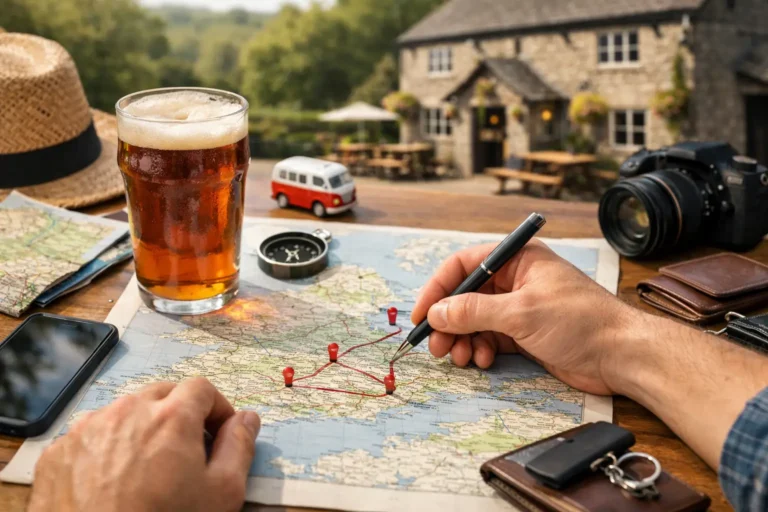
If you are visiting somewhere new, using a pub finder app can help you sort this quickly. Looking at recent ratings, food photos and whether people save a place for meals or for pints gives you a better clue than the venue calling itself one thing or the other.
The UK pub scene is full of hybrids
One reason this comparison can get messy is that British pubs are adaptable. Plenty of places move comfortably between categories. A rural inn may serve top-quality food but still keep a proper public bar. A city-centre pub might look traditional yet run a kitchen that would not feel out of place in a good gastropub.
That is good news for pub-goers. It means you do not have to pick a side forever. The best venues borrow from both models. They keep the warmth, accessibility and beer culture of a traditional pub while taking food seriously enough that you would happily recommend it for dinner.
It also means reviews matter. A place described as a gastropub five years ago may now feel more like a restaurant, while a once-basic local may have quietly become one of the best food pubs in the area. Honest, up-to-date pub reviews are often more useful than category labels.
So which should you choose?
Choose a gastropub when food is central to the plan, when you want a more polished setting, or when the group includes people who will judge the outing by what is on the plate. Choose a traditional pub when the pint, the atmosphere and the ease of the visit matter most.
If you can find a pub that does both well, hold onto it. Those are the places people return to, recommend to mates and build weekends around. And if you are not sure what sort of pub fits the day, go with the one you would still enjoy if the kitchen closed early and you stayed for one more drink.