
A pub with 4.8 stars can still be the wrong place for your Friday night. It might be a superb Sunday lunch spot with limited real ale, a peaceful village local when you want match-day noise, or a cracking beer garden that only shines in warm weather. That is why pub ratings are most useful when you treat them as a starting point, rather than a final verdict.
The best pub choice is rarely about finding the highest number on a screen. It is about finding the right pint, atmosphere and setting for the people you are with. A score can help narrow the field, but the detail behind it tells you whether a pub will suit the occasion.
What pub ratings can tell you
A rating is a quick read on how consistently a pub meets its visitors’ expectations. When lots of recent reviews mention friendly staff, well-kept cask ale, good-value food or a relaxed atmosphere, that pattern is worth noticing. One glowing review may reflect a particularly good afternoon; dozens of similar comments usually indicate something more dependable.
Ratings are particularly handy when you are somewhere unfamiliar. Perhaps you have arrived early for a gig, are staying in a new city for the weekend, or want a decent stop on the way home from a walk. A strong average, backed by recent comments, can save you from settling for the nearest option.
They also make comparison easier. Two pubs may both have good scores, but one might earn praise for its traditional interiors and local beers while the other is known for generous Sunday roasts and family-friendly tables. Neither is automatically better. The useful question is: better for what?
Why the highest score is not always the best choice
Every pub has a personality, and numbers naturally flatten some of that character. A historic boozer with small rooms, uneven floors and a busy bar may receive a lower rating from people expecting swift table service. For plenty of pub-goers, those quirks are part of the appeal.
Likewise, a lively sports pub may be brilliant when a big fixture is on, but less appealing if you are hoping to catch up quietly. A destination gastropub can offer exceptional food but require booking, cost more than a casual local and feel less suited to a quick pint. Ratings cannot decide those trade-offs for you.
Look carefully at the number of reviews too. A 5.0 score from four visitors is encouraging, but it does not carry the same weight as a 4.5 from several hundred people over a sustained period. Neither should be dismissed, but confidence grows when praise is repeated by a broad mix of visitors.
Recency matters just as much. Pubs change managers, chefs, beer ranges and opening patterns. A review written three years ago may still describe the building beautifully, yet be less useful for judging today’s service or the condition of the ale. Give greater weight to comments from the past few months, especially if several people raise the same point.
How to read pub reviews properly
Start by scanning the newest reviews, then read a spread of positive, middling and critical comments. You are not trying to find a pub that nobody has ever disliked. You are looking for useful patterns and deciding which ones matter to you.
A complaint about slow food on a packed bank holiday may be fair, but it is not the same as repeated reports of poor service on ordinary weekday visits. Equally, repeated praise for the cellar, welcoming staff or a well-run quiz night is more meaningful than a vague comment saying only that the pub was “nice”. Specific reviews tend to be more useful because they explain what the visitor actually experienced.
Consider the reviewer’s purpose as well. Someone calling a pub “too quiet” may have wanted a party venue. Someone else calling it “too loud” may have visited during a football match. Those comments can both be accurate. Read them as clues about the setting rather than opposing facts.
Photos can help, particularly for checking the size of a beer garden, the style of the interior, accessibility and whether food looks like the sort you enjoy. They are less reliable for judging atmosphere. A pub can look empty at 3pm on a Tuesday and be buzzing, in the best way, by Saturday evening.
Match the review to your plan
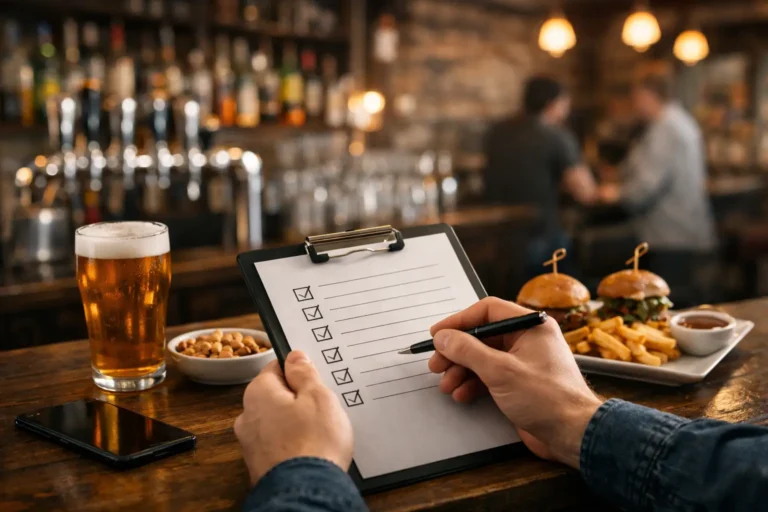
Before choosing a pub, be clear about what you need from it. A quick mental checklist avoids the common mistake of choosing a highly rated venue that is simply a poor fit.
- For cask ale, look for recent mentions of well-kept beer, changing guest ales and knowledgeable bar staff.
- For food, check whether reviewers discuss particular dishes, booking advice, portion sizes and service at busy times.
- For a group outing, seek comments on table space, music levels, sport screens and whether the pub takes bookings.
- For a dog walk or family lunch, look for practical detail such as water bowls, outdoor seating, children’s menus and parking.
- For a pub crawl, check opening hours, distance between stops and whether each venue offers a genuinely different atmosphere or beer range.
This is where a lower-rated pub can become the better choice. The small ale house with no kitchen may be exactly right for a pint after work. The well-rated riverside pub may be perfect for a sunny afternoon, even if it is less convenient in winter.
Give fair weight to negative reviews
Not every low score is a warning sign. A single poor visit can happen at any venue, especially when a pub is short-staffed, unexpectedly busy or dealing with a kitchen problem. The fair approach is to look for repetition, detail and how recently the experience happened.
Be cautious with reviews that offer no context, whether they are lavishly positive or sharply negative. A one-line complaint rarely tells you enough to judge the pub. More useful feedback explains when someone visited, what they ordered or what expectation was not met.
It is also worth recognising that pubs operate under real pressures. A beloved independent local may have fewer staff than a large chain, while a popular kitchen may need longer at peak times. That does not mean standards do not matter. It simply means the most helpful reviews distinguish between a one-off delay and a consistent problem.
If you leave your own review, do the same. Mention the day or time, what you had to drink or eat, the atmosphere and anything future visitors would genuinely want to know. Be constructive where something fell short. Honest pub reviews help owners understand what is working and help fellow pub-goers make better plans.
Use ratings alongside local knowledge
The strongest recommendations combine ratings with a little local context. A pub may be known for its Tuesday folk session, its annual beer festival, its hidden courtyard or a particularly good pint from a nearby brewery. Those details often make the difference between an acceptable stop and a memorable one.
Location guides and themed round-ups can add that missing context. If you are seeking a proper traditional pub, a craft beer bar, a dog-friendly garden or a route of independent venues, a focused guide is likely to be more helpful than sorting every nearby pub by score alone. The same applies to ale trails and city pub crawls, where variety and walking distance matter as much as individual ratings.
When you are out and about, the Pubs Near Me: Pub Finder UK Android app can make the practical side easier. Use it to find pubs nearby, save favourite pubs for another day, build a sensible crawl, track places you have visited and add your own rating once you have had the experience yourself. It is especially useful when a promising pub is just around the corner but you want to compare it with the next stop before setting off.
A better way to choose your next pub
Think of a rating as the pub sign outside the door: an invitation to look closer, not the whole story. Check the recent detail, match it to your plans and leave room for the kind of character that cannot be reduced to a decimal point.
The most rewarding finds are often the pubs that suit your particular evening perfectly: a calm corner and a proper pint, a garden table after a long walk, or a friendly bar that turns one drink into a good local conversation. Choose thoughtfully, travel safely and add a useful review afterwards so the next person has a better chance of finding their own favourite.