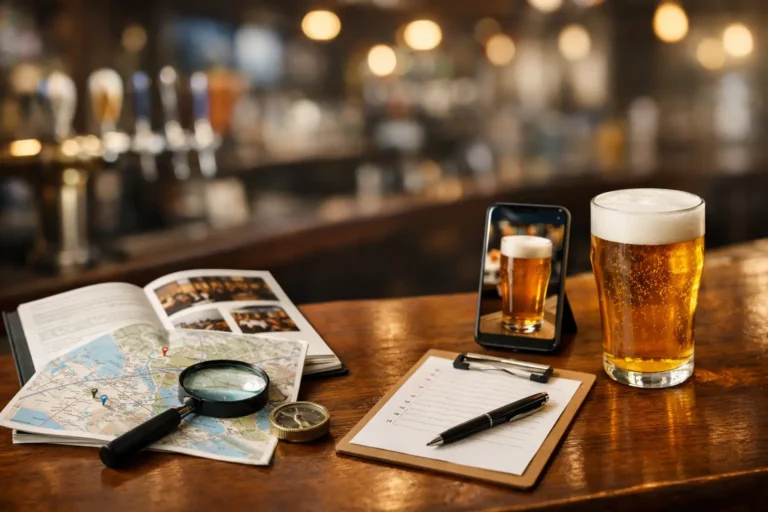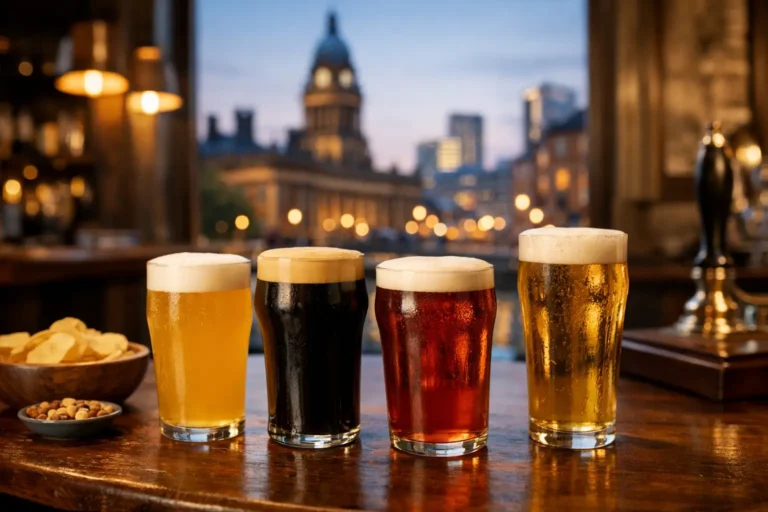
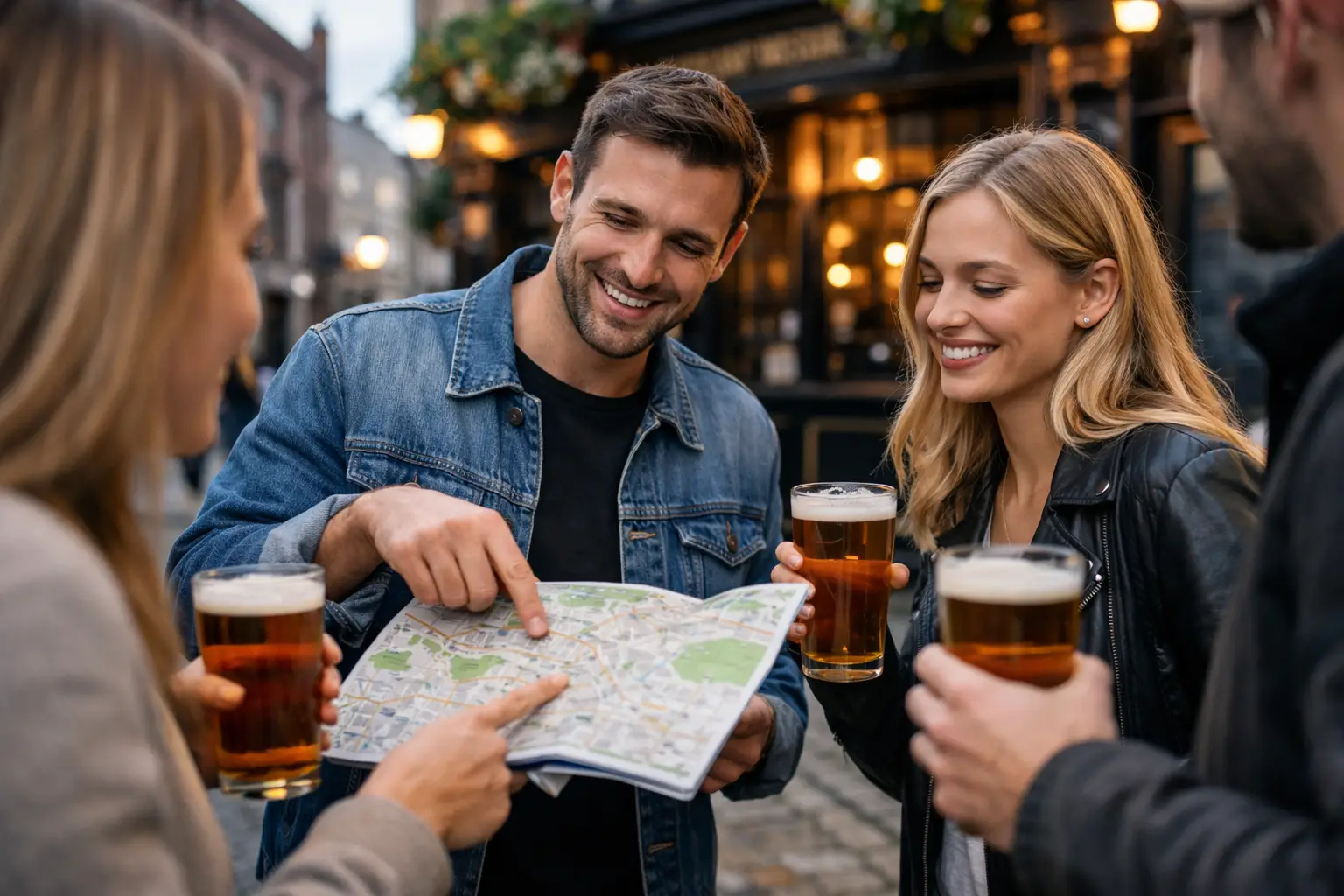
A great pub crawl is not about cramming in as many pints as possible. It is about moving through a neighbourhood with good company, finding a mix of proper pubs and getting everybody home safely. If you want to plan a responsible pub crawl, think like a good local guide: choose venues with character, allow time to enjoy each one and make the practical decisions before the first round is ordered.
The best nights usually have a rhythm. A cosy opener, a pub with a decent food menu, perhaps a specialist ale house or a beer garden if the weather is kind, then a sensible final stop near transport. That approach leaves room for conversation, good beer and the occasional hidden gem, rather than turning the evening into a race.
Plan a responsible pub crawl around the route
Start with geography, not a list of pubs you vaguely fancy. Pick one compact area and build a route that can mostly be walked in 10 to 15 minutes between stops. A crawl spread across a whole city may look ambitious on paper, but long journeys interrupt the mood and make it harder to keep track of the group.
Three or four pubs is usually plenty for an evening. Five can work for an afternoon-to-evening wander, especially if there is food involved and the group is happy to take things slowly. More than that often means you remember less of the places you chose so carefully.
Check opening hours, kitchen times and whether a pub takes bookings. A traditional local may be perfect for the first drink but stop serving food early, while a popular city-centre pub could be standing room only after work. A quick look at honest pub reviews can help you spot the places known for cask ale, good-value food, live sport or a quieter corner.
Give every stop a purpose
The strongest routes have variety. Rather than choosing four pubs that offer exactly the same thing, give each venue a role in the evening. You might begin somewhere relaxed enough for everyone to arrive and settle in, move on to a pub with food, include one place chosen for its beer range or history, and finish near a taxi rank, station or reliable night bus route.
This is not about being overly regimented. It simply prevents the familiar problem of arriving at a packed pub, finding there is nowhere to sit and then losing half the group while deciding where to go next. Keep one nearby backup pub in mind for every key stop.
Choose people, pace and budget before the first pint
A responsible crawl works best when the group agrees on the shape of the evening. That includes meeting time, likely finish time, how people are getting home and whether anyone needs to leave earlier. It may sound obvious, but a short message before you meet can spare a lot of muddle later.
Pacing is personal. Someone having a soft drink, a low-alcohol beer or one drink over a longer period is just as much part of the crawl as the cask ale enthusiast comparing bitters. Avoid rounds that pressure everyone to drink at the same speed or order something they do not want. Offer to buy a soft drink as readily as a pint, and make stopping for water feel entirely normal.
Budget matters too. A pub crawl does not need to become an expensive night simply because there are several venues involved. Decide whether people are paying individually, splitting selected shared food or taking turns on rounds. Individual tabs are often the easiest option in a mixed group, particularly where drinking habits and budgets vary.
Eat properly, but do not treat food as a fix
A proper meal or substantial snack is a worthwhile part of the route, particularly if you are meeting straight after work. Book a table if the food stop is central to the plan, and check for dietary requirements well in advance. Sharing chips may be a pleasant addition, but it is not a substitute for eating enough.
Food can help people avoid drinking on an empty stomach, but it does not make someone fit to drive or cancel out alcohol. The same goes for coffee, fresh air and a cold shower. The responsible choice is to plan transport that does not involve anyone driving after drinking.
Make travel home part of the itinerary
Before setting off, check the final train, last bus and local taxi options. If the route ends near a station, build in enough time to walk there without a last-minute sprint. For groups travelling from different directions, choose a final pub with clear transport links rather than assuming everyone will sort it out at closing time.
If someone is cycling, driving or using an e-scooter, the plan should be simple: they do not drink alcohol. Do not leave this to a late-night decision. A driver can still enjoy the atmosphere, good food and an alcohol-free beer, and it is far better to make that expectation clear than put someone in an awkward position later.
It is also worth agreeing a basic buddy system, especially in a busy city centre or when the group includes people who do not know each other well. Nobody needs to be watched over, but make sure no one is left behind unexpectedly and that a person who wants to head home has support to do so.
Use pub knowledge, not just the nearest pin on a map
The nearest venues are not always the best fit. Look for a route that suits the occasion: historic pubs for visitors, a mix of real ale and modern beer for enthusiasts, dog-friendly spots for an afternoon with the pup, or pubs with screens and room to stand for a match-day meet-up.
Atmosphere changes through the day. A peaceful pub at 4pm can be lively by 7pm, while an after-work crowd may clear in time for a relaxed later drink. Community reviews are useful here because they often reveal the details that do not show up on a menu – whether conversations are possible, whether the beer garden gets sun, or whether the pub is better for a quick pint than a long catch-up.
For a little more organisation, the Pubs Near Me: Pub Finder UK Android app can help you find pubs nearby, save favourite pubs, build a route and track the places you have visited. It is particularly handy when a planned stop is unexpectedly full and you need a good alternative without wandering aimlessly.
Keep the group comfortable and the pubs respected
Pub crawls are social, but every pub is someone else’s local as well as a business serving a wider crowd. Be patient with staff during busy periods, keep noise considerate, and do not block entrances, bar areas or narrow pavements while the group decides what to do next. A friendly group that orders thoughtfully, treats staff well and leaves tables tidy is welcome almost anywhere.
Be mindful of the people around you, too. Not everyone is drinking, and not everyone wants the same kind of evening. If a friend seems uncomfortable, unwell or keen to leave, take it seriously without making a fuss. The aim is not to police each other. It is to make sure the night remains enjoyable for everybody.
There is no prize for finishing every stop on the list. Skip a pub if the group is happy where it is, leave an overcrowded venue without complaint, and call it a night when the energy has dipped. The most memorable crawls are often the ones with time for a good chat, a well-kept pint and one pub you would happily return to on a quieter day.
A well-planned crawl should leave you with favourite new places, not a foggy list of venues you barely saw. Pick a manageable route, stay flexible, look after your mates and let the pubs themselves do the rest.