A good pub day can be spoiled surprisingly quickly by a closed door, an out-of-date food menu or a ‘lively’ bar that turns out to be wall-to-wall with screens and nowhere to sit. The best pub apps help with the practical bits before you set off, so there is more time for a proper pint, decent conversation and discovering somewhere with character.
They are not a substitute for stepping inside and making your own mind up. Atmosphere changes by the hour, and even the most detailed listing cannot tell you whether the fire is lit, the garden has caught the sun or the landlord has just put a particularly good cask on. But used well, pub apps can take much of the guesswork out of finding pubs near you, choosing a route and remembering the places worth returning to.
What makes a pub app genuinely useful?
The difference between a useful pub finder and a generic venue directory is focus. A pub-goer often wants more than an address, a star rating and a photograph taken eight years ago. They may be looking for a quiet traditional pub near a station, a dog-friendly Sunday lunch, a beer garden for a group, somewhere showing the football, or a proper ale house for a weekend away.
The strongest pub apps make those decisions easier with clear, current details. Opening hours, location, accessibility, food availability and useful features such as outdoor seating or live sport are a sensible starting point. Better still, they make it easy to browse by the sort of experience you actually want rather than forcing every pub into the same generic category.
Reviews matter too, but context matters more. A one-star complaint about a pub being quiet at 3pm is not much help to someone hunting for a peaceful midweek pint. Look for reviews that explain when the person visited, what they ordered and why the place did or did not suit the occasion. Honest pub reviews should help you decide whether a pub is right for you, not declare a universal winner.
Nearby discovery is more useful than a long list
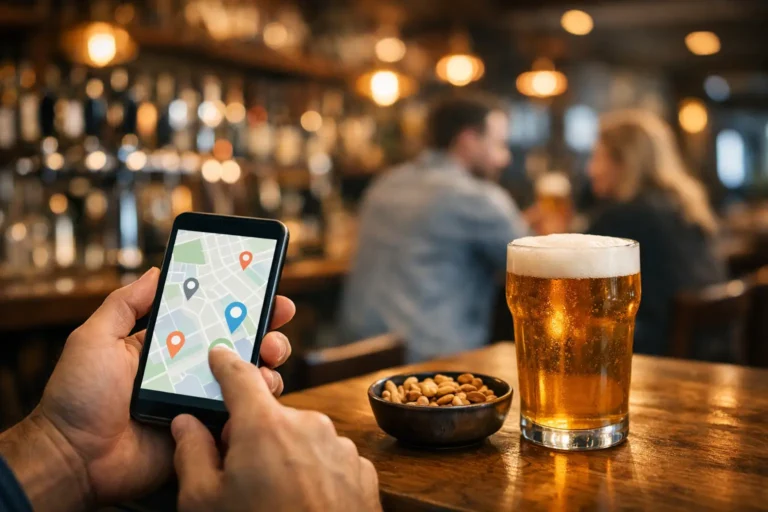
When you are in an unfamiliar town, distance is only part of the picture. The closest pub may be a ten-minute walk up a steep hill, on the wrong side of a busy road or simply not your sort of place. A map view lets you see how venues sit together and whether a promising-looking pub fits naturally into your afternoon.
This is particularly handy on city breaks and rail trips. Instead of choosing the first place outside the station, you can check what lies a few streets away, compare the feel of several venues and spot the hidden gems that rarely appear at the top of broad search results.
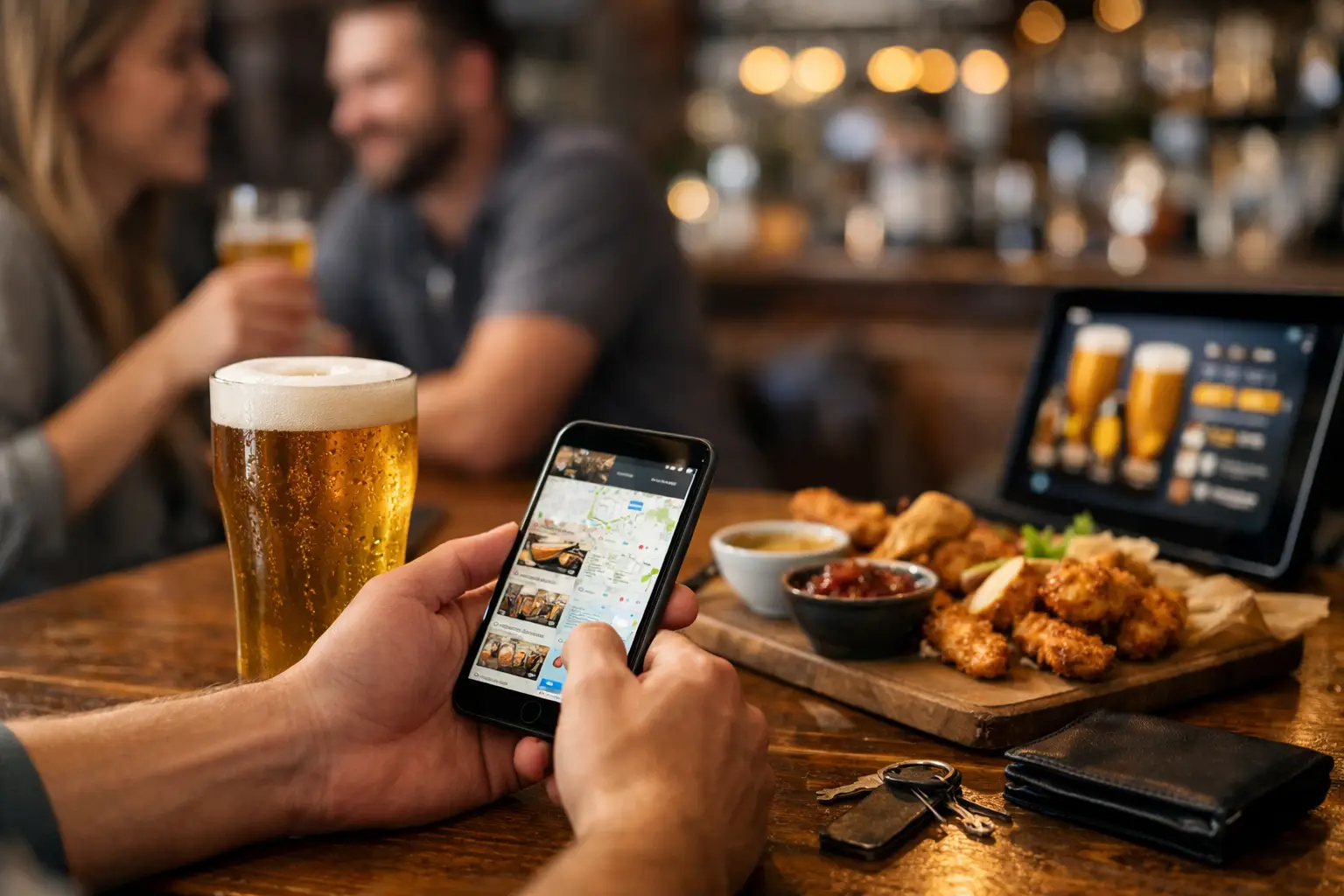
A dedicated pub finder app such as Pubs Near Me: Pub Finder UK is built around that kind of discovery. It can help you find nearby pubs, browse them on a map and save favourite pubs for another visit, rather than relying on a vague memory of ‘that nice place near the old market’.
Pub apps for planning a crawl, not rushing one
A well-planned pub crawl is not about cramming in as many stops as possible. It is about giving a day out a bit of shape: perhaps a historic opener, a specialist beer pub, somewhere for food and a comfortable final stop where everyone can sit down. The right route leaves room for a slower pint, a change of plan and a safe journey home.
Apps with crawl-building features are useful because they turn a collection of saved places into a workable route. You can see whether your choices are realistically walkable, avoid doubling back across town and make sure there is food somewhere along the way. For groups, it also gives everyone a shared plan without a stream of confusing messages about where to meet next.
There is a trade-off here. A rigid itinerary can make a pub crawl feel like a school trip. It is better to choose three or four likely stops and treat anything else as optional. If a brilliant local turns up halfway through the afternoon, that is often the point of being out in the first place.
For themed days, start with an existing city guide, pub crawl page or ale trail, then tailor it to the group. A cask ale enthusiast, a couple travelling with a dog and friends looking for a match-day atmosphere will not all want the same route. Pub apps are most useful when they help you adapt a plan rather than impose one.
Save pubs while the memory is fresh
The pub you mean to revisit is easily forgotten after a busy weekend. Saving it immediately is far more reliable than searching later for ‘red-brick pub near canal, good chips’. Favourite lists can become genuinely useful personal guides: your best post-walk pubs, reliable Sunday roasts, places with excellent gardens, or pubs to try on your next trip to a particular city.
Tracking pubs visited can be enjoyable for a different reason. It gives you a record of the places that have made an impression, whether that is a centuries-old inn, a cheerful community local or a tiny back-street ale bar. It need not become a competition. A shorter list of pubs you would happily recommend is more valuable than a huge tally built at speed.
Beer tracking can improve the next pint
For drinkers interested in cask, craft beer or changing guest lines, beer tracking is one of the more appealing app features. A quick note on a favourite bitter, pale ale or stout can help you remember what you enjoyed, where you found it and whether a particular pub regularly keeps interesting beer.
It also makes recommendations more useful among friends. Saying ‘they had a great pale ale’ is pleasant but vague. Remembering the brewery, style and when you tried it gives someone else a better chance of finding something they will like. That said, beer lists rotate, particularly in independent pubs, so treat app information as a clue rather than a promise.
Food deserves the same common sense. Menus and serving times can change with little notice, especially on bank holidays or during busy sporting fixtures. If eating is central to the plan, check the latest details before travelling and have a second option nearby. A good app gets you most of the way there; a quick final check avoids disappointment.
How to use pub apps without losing the fun
The temptation is to over-research. Filters, ratings, photographs and lists can make it feel as though every choice must be optimised before you leave the house. Pubs do not really work like that. The best moments are often unplanned: a friendly recommendation from behind the bar, an unexpectedly good pie, a sunny table becoming free or a local band setting up in the corner.
Use an app to make sensible decisions, then leave space for discovery. Check the essentials, save two or three options and read a handful of recent, detailed reviews. Once you arrive, trust your own judgement. Is the welcome warm? Does the place suit the mood? Is there a beer or menu choice that appeals? Those are the details no algorithm can fully capture.
It is also worth adding your own review after a visit, especially for lesser-known pubs. A fair, specific note about the atmosphere, service, beer selection, accessibility or garden can make a real difference to the next person planning a visit. Keep it constructive and remember that a pub may be excellent for one occasion and less suited to another.
Choose an app around your kind of pub day
There is no single best choice for everyone. If you often travel, nearby maps and practical location details should be top of the list. If you organise group outings, a pub crawl planner and shareable saved places are more useful. If your main interest is ale, beer tracking and detailed pub notes will matter more than a broad nightlife feed.
For most people, the most useful approach is simple: keep a reliable app for finding pubs and saving the good ones, use local guides for ideas, and remain open to the place you had not planned to find. That is where many of the best pub stories begin.