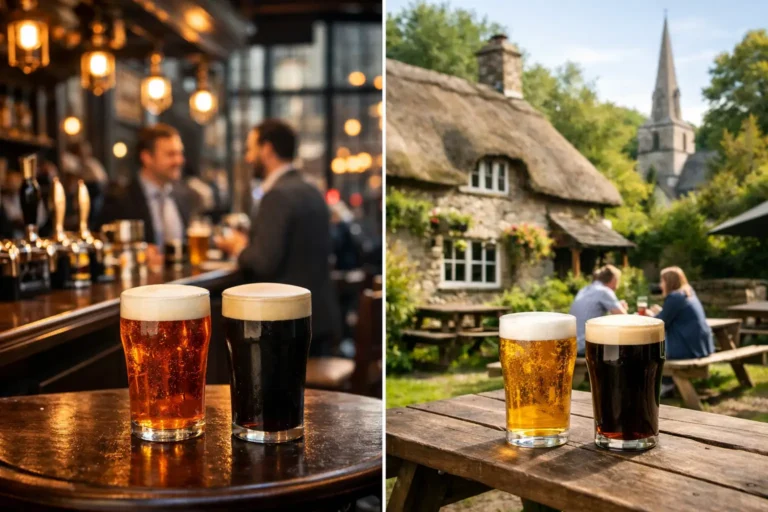
A good pub game night is not about finding the biggest shelf of dusty boxes beside the loos. The best pubs with board games get the basics right first: decent pints, enough room to play without knocking over someone else’s dinner, and an atmosphere where staying for one more round feels entirely reasonable.
For a low-key catch-up, a first date that needs something to talk about, or a group outing that does not revolve around watching the score, board games give a pub visit a bit of shape. You can settle in, put phones aside for an hour, and discover which of your mates becomes unexpectedly ruthless over a tiny wooden railway.
What makes a pub good for board games?
Not every pub with a copy of Scrabble qualifies as a proper games pub. A thoughtful selection helps, but the practical details make the evening work. Start with the tables. Small round tables suit a couple playing cards or a compact game, while a group tackling a strategy game needs a stable, generously sized surface and chairs that do not have everyone perched on the edge of a bench.
Lighting matters more than it sounds. Traditional pubs can be wonderfully cosy, but a game with small print, coloured pieces or a busy board becomes a chore in near-darkness. Look for a comfortable corner, good overhead light and enough space to keep drinks safely away from the playing area.
Staff attitude also sets the tone. Some pubs actively welcome game groups, offer recommendations and understand that a table may be occupied for a while. Others are better for a quick pint than a three-hour game. Neither is wrong, but it is worth matching the venue to the plan.
A strong games pub usually balances a lively feel with manageable noise. Fast party games can thrive in a busy bar, whereas a cooperative mystery or a tactics-heavy game is far more enjoyable when you can hear each other. If you are meeting on a Friday or Saturday, booking ahead is often the difference between a relaxed session and trying to balance a board on your knees.
Choosing pubs with board games for your group
The right choice depends on who is coming and how they like to spend a night out. A couple or two friends may want quick games that leave plenty of time for conversation. A larger group needs games that avoid long waits between turns, particularly if people are arriving at different times.
For mixed groups, familiar games are often the safest starting point. Cards, word games, drawing games and simple team games are easy to explain after the first round of drinks. Heavier strategy games can be brilliant with the right crowd, but only if everyone has signed up for the same sort of evening. There is little point bringing a two-hour rules explanation to a group that mostly wants a chat and a packet of crisps.
Check the game list, but do not obsess over it
Some specialist board-game pubs publish their full libraries, sometimes with hundreds of titles. This is useful if you have a particular game in mind or want to try something new. Many neighbourhood locals, though, keep a smaller selection of reliable favourites. That can be ideal for an informal visit.
If the pub does not list games online, a quick call can save disappointment. Ask whether games are available, whether there is a charge to use them, and whether they take table bookings for groups. It is also sensible to check opening times for the kitchen if food is part of the plan.
Think about food, beer and pacing
Board games naturally slow an evening down, so choose a pub where you will be happy to linger. A good kitchen, quality bar snacks and a well-kept cask ale line-up can turn a game into a full afternoon or evening out. Just be realistic about the table: greasy sharing plates and games with lots of cards are not ideal partners.
A sensible approach is to eat first, clear the table, then start playing. Keep drinks to one side, use coasters where possible and avoid placing a full pint directly above a board full of components. It sounds obvious until somebody reaches across to make a winning move.
The kinds of games that work best in a pub
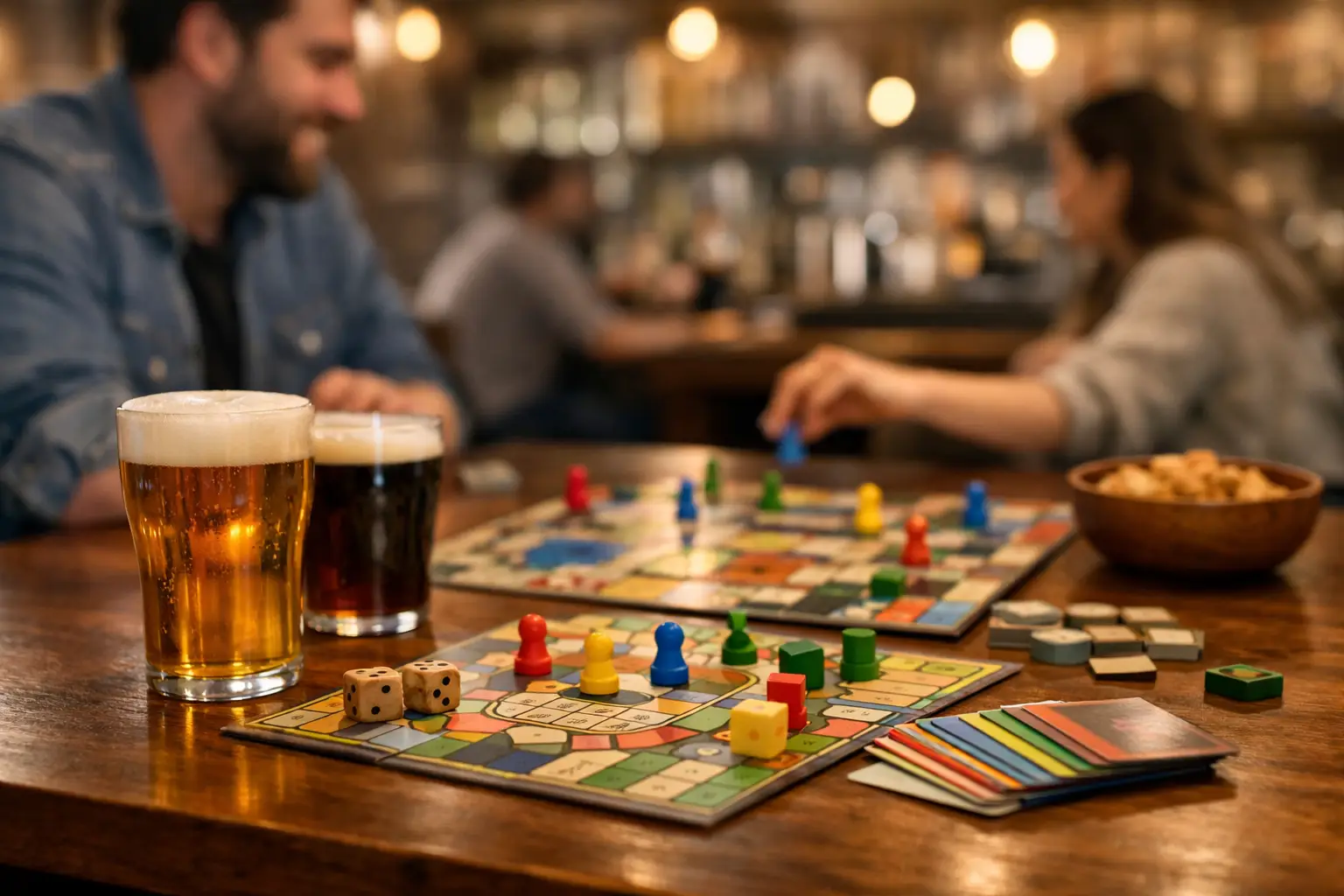
Pub-friendly games tend to be easy to pause, straightforward to learn and resilient to a little background noise. There is no universal rule, but these four styles usually travel well:
- Quick card and tile games work well for two to four people and fit neatly on smaller tables.
- Party and team games suit birthdays, work mates and larger gatherings, especially when players can join between rounds.
- Co-operative games give everyone a shared aim, which is useful when the group includes newcomers or people who dislike direct competition.
- Light strategy games offer more depth without demanding a silent room or an entire evening of rule checking.
Leave games with hundreds of tiny pieces, sprawling maps or lengthy set-up times for home unless the pub is designed for serious play. A game that takes ten minutes to arrange and another ten to explain can lose its charm when the bar is busy and half the group is ordering another round.
A few pub manners that keep the table happy
Game nights work best when they remain considerate of the pub and the people around you. Do not spread boxes, coats and spare components across neighbouring tables, particularly during food service. If the venue is busy, ask before claiming a large table for a small group, and be prepared to move if it has been reserved.
Treat the games as you would the pub’s glassware. Put pieces back in the box, do not write on score sheets unless they are intended for it, and let staff know if something has gone missing or suffered a spill. A damaged set is frustrating for the next group and costly for an independent pub to replace.
It also helps to keep the evening sociable rather than competitive at all costs. The aim is a good pub night, not a tribunal over whether a rule was interpreted correctly. Agree a house ruling, laugh about it and carry on.
Planning a board-game pub outing
For a larger group, pick the pub before picking the game. Choose somewhere accessible by public transport, with room for everyone and food options that suit the group. An early afternoon slot is often easier for a longer game, while a midweek evening can offer a quieter room and more choice of tables.
If you want to make an occasion of it, plan a short route rather than a rushed crawl. Start at a pub with the best tables and game selection, then move on for a final pint or supper nearby once you have finished. Keep the journey walkable, know when you are calling it a night, and make sure everyone has a safe way home.
The Pubs Near Me: Pub Finder UK app can be handy here. Use it to find pubs nearby, save favourite pubs for later, track places you have visited and build a simple pub crawl around the area. Community ratings and reviews are particularly useful when you want to check whether a venue feels more like a quiet local, a food-led pub or a lively city-centre stop.
Find the right table, not just the right game
The appeal of pubs with board games is simple: they make room for proper time together. You are not rushing through a meal or shouting across a crowded dance floor. You are sharing a table, a few laughs and perhaps an increasingly dramatic battle over a game no one expected to care about.
Pick a pub that suits the pace of your group, support it with a well-chosen round or meal, and leave the next players a complete set. The best game night usually starts with a good table and ends with the easy question: shall we play another?